
The complete guide
How to Choose a Wall Wine Rack with Glass Holder
The problem with storing wine on the bench
Wine takes up more room than people expect. A dozen bottles standing in a corner is a surprising amount of real estate, and once the glasses join them you have lost a decent chunk of usable bench. Then there is the shuffle. You move three bottles to get at the chopping board, move them back, knock one over, and the whole corner becomes the spot nobody wants to deal with.
Cupboards are not much better. Bottles laid flat in a low cupboard are hard to see and harder to reach, so you end up drinking the same two and forgetting the rest. Glasses in cupboards collect dust in the bowl if the door is not sealed well, which means a rinse before every pour.
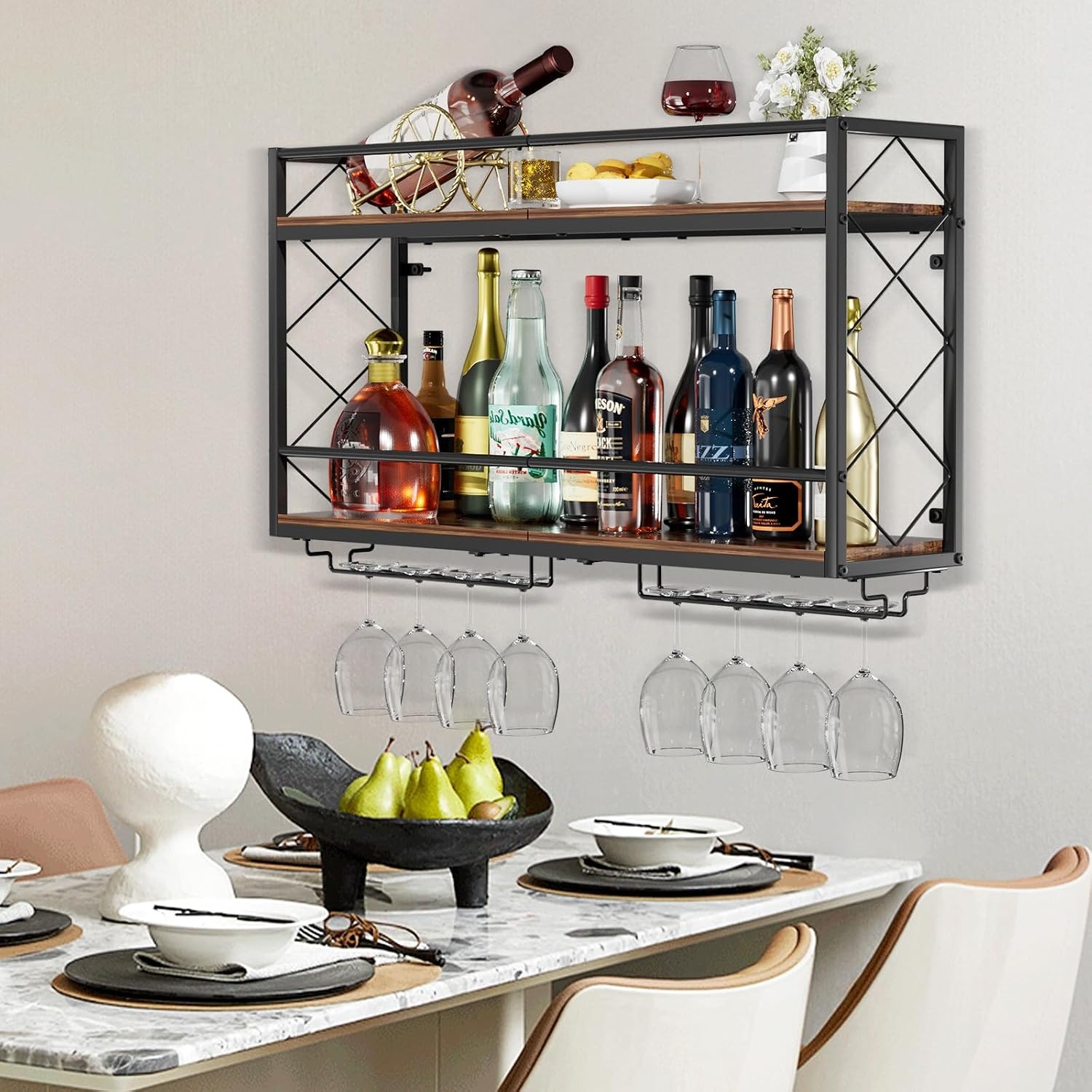
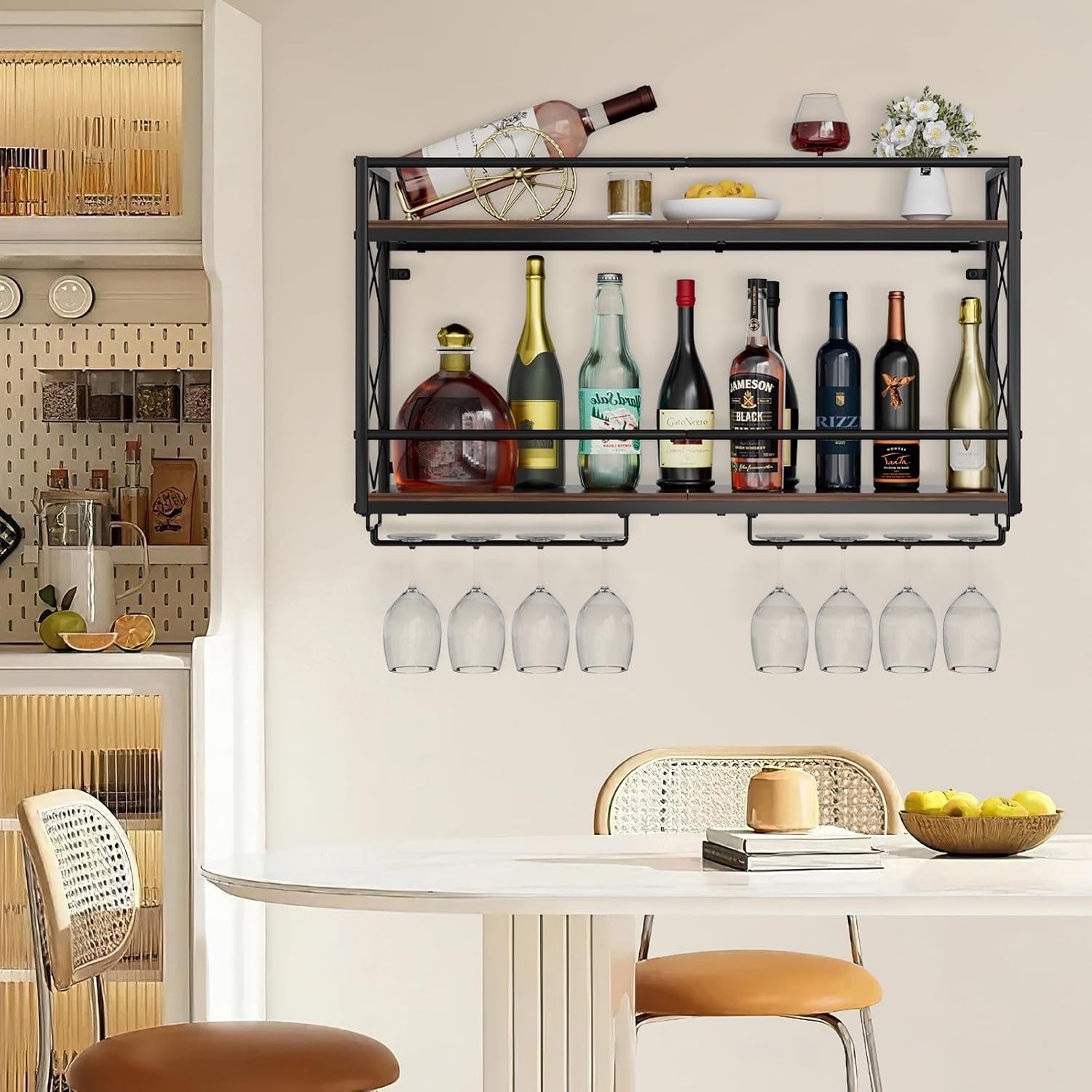
A wall mounted wine rack moves the whole problem onto a surface you were not using. Wall space above a bench, beside a fridge or along a dining room wall is almost always dead space. Put a rack there and you get the storage back plus a display that actually looks intentional.
How this rack works
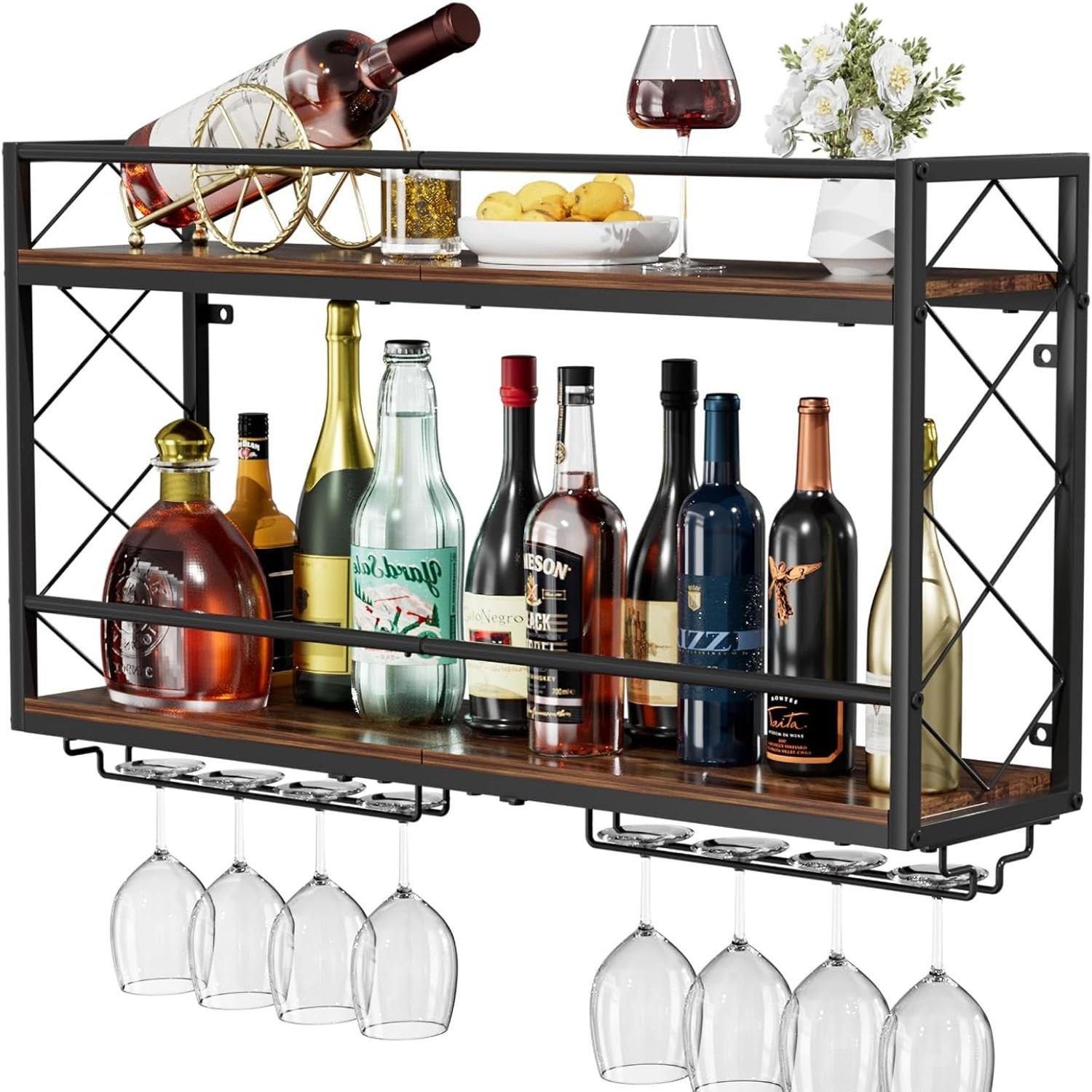
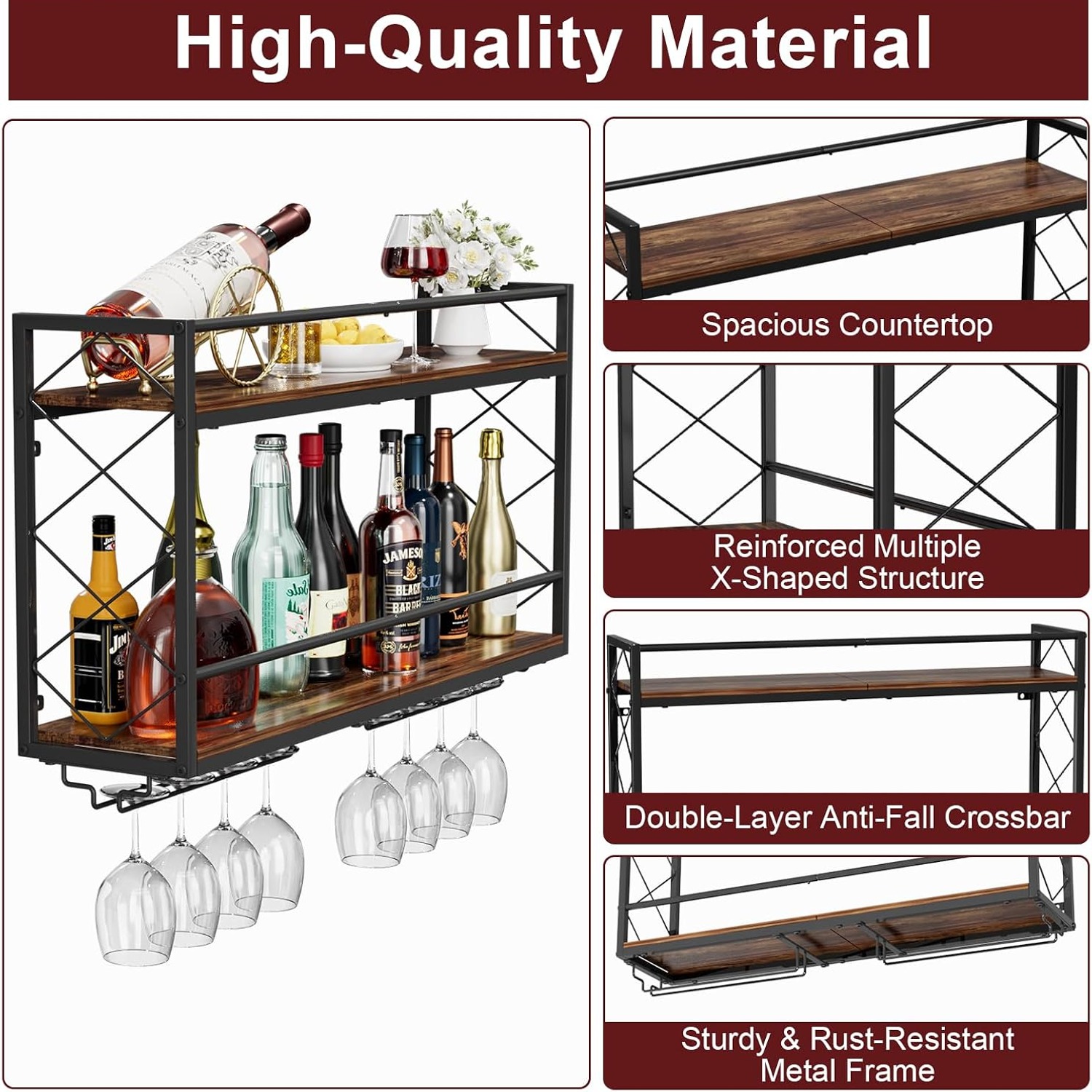
The structure is simple and that is the point. A painted metal frame gives the rack its strength and holds the shape. Two engineered wood shelves slot into the frame and carry the bottles, up to 12 of them, laid horizontally. Underneath, a set of rails forms the wine glass holder. Glass feet slide into the rails and the glasses hang upside down, bowl facing the floor.
Hanging glasses upside down is not just a design flourish. It keeps dust and kitchen airborne grease out of the bowl, it stops glasses getting chipped against each other in a cupboard, and it means you can see exactly what you have at a glance. For anyone pouring regularly, having the glasses hanging directly over the bottles turns serving into a single reach.
Horizontal bottle storage matters too if you keep anything under cork. Lying bottles down keeps the cork in contact with the wine, so it stays swollen and sealed. Screw caps do not care either way, but if you ever buy a bottle to keep for a year or two, the shelf orientation is already doing the right thing.
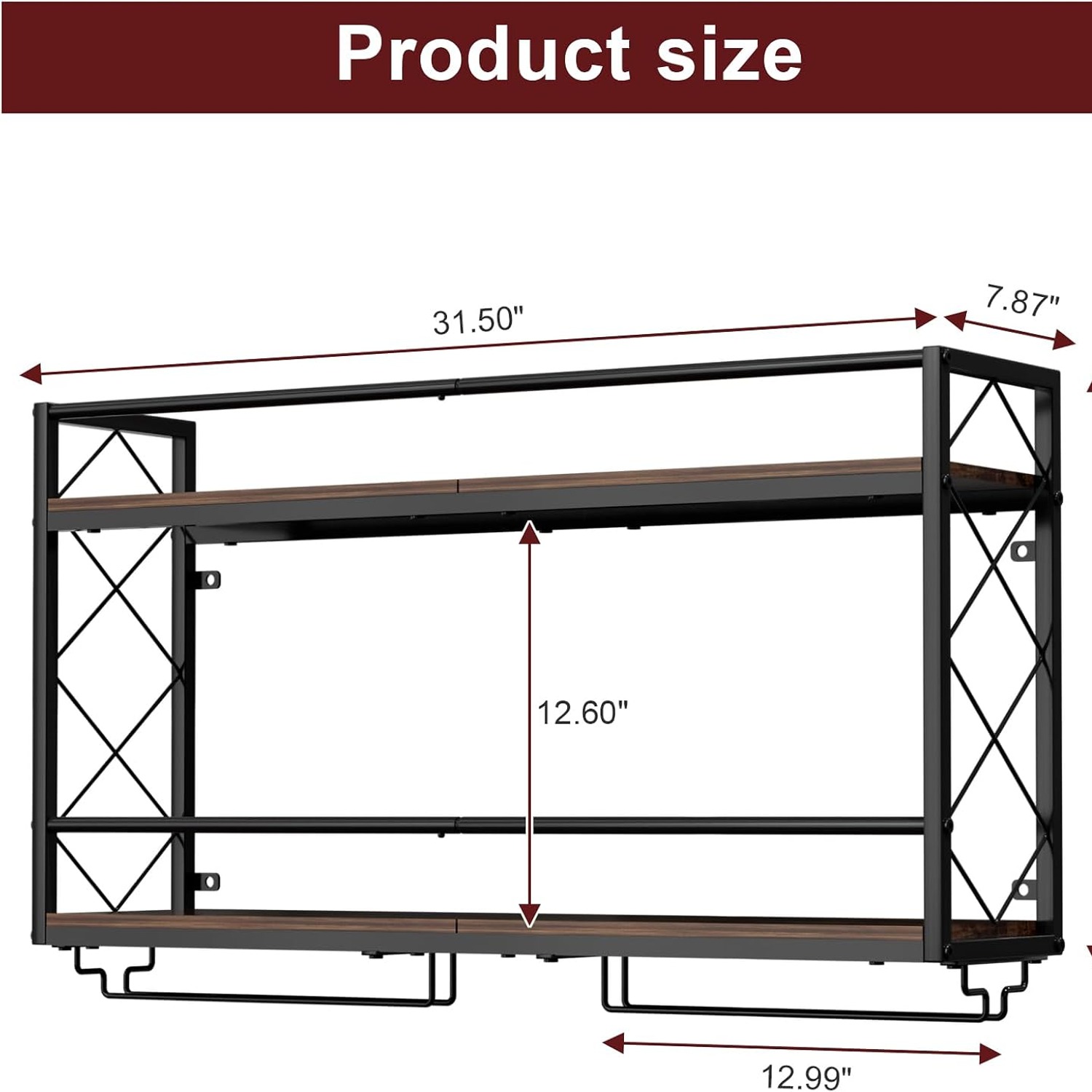
The overall footprint is 80.5 cm wide, 20 cm deep and 43 cm high. The depth is the figure most people should check first. Under 21 cm means the rack sits close to the wall, so it does not clip a shoulder in a narrow kitchen or crowd a chair pushed back from a dining table.
Who this suits
It suits people with more wine than bench. That is most apartment kitchens, most small dining rooms, and almost every home bar that started as a shelf and grew.
It also suits anyone building a corner with some character. The brown vintage finish and the mix of timber and metal reads warmer than a plain steel rack, so it holds its own as a piece of decoration even when it is half empty. Plenty of buyers use the shelves for a trailing plant, a few books or a couple of nice spirits bottles alongside the wine.
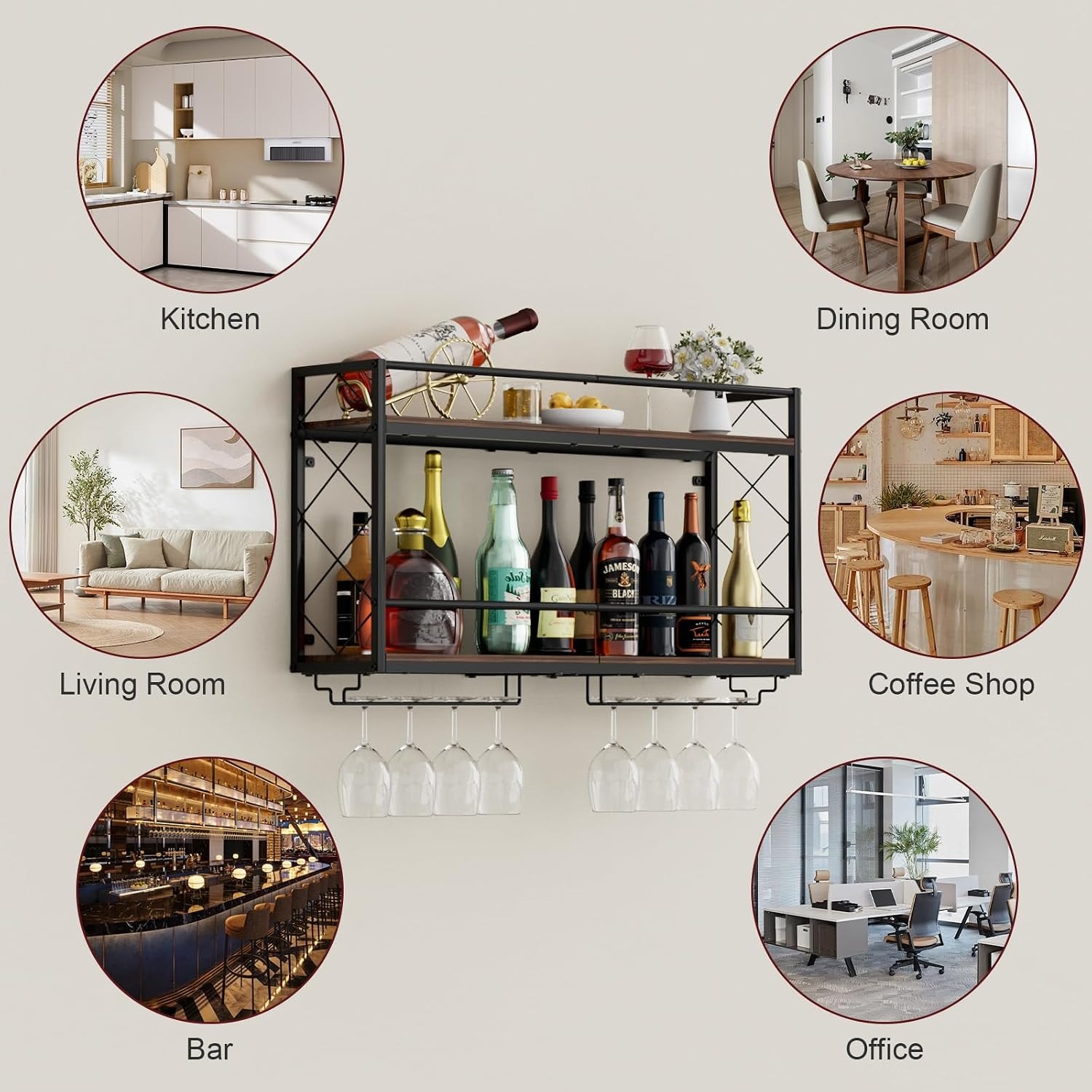
Hospitality spaces work well too. Cafes, bars, restaurants and hotel rooms all use this style of rack because it gets stock off the floor and puts it at eye level where people see it. If you are fitting one out commercially, the main thing is the wall behind it, and anything that will take a proper masonry or stud fixing is fine.
Who it does not suit: anyone who cannot drill. The rack needs screw fixings. Adhesive strips and tension systems are not rated for a loaded wine rack, and a dozen full bottles plus stemware is not a load to improvise with.
Choosing the right spot
Start with the height. A good rule is to mount the rack so the shelves land somewhere between eye level and just above your bench, which usually puts the base of the rack 120 to 150 cm off the floor. Then check the clearance underneath. Your glasses hang below the rails, so you need the length of your tallest stem plus a little room to lift them out.
Next, think about light and heat. Wine does not like sunlight or temperature swings. A wall opposite a west-facing window will cook bottles in summer, and the space directly above a cooktop or beside a heater is worse again. An interior wall, a hallway or a shaded dining room corner all give you a steadier environment.
Then measure the wall properly. Mark out 80.5 cm wide and 43 cm high with painter's tape and live with it for an hour. It is a cheap way to find out that the rack will clash with a light switch or sit awkwardly against a window frame.
Finally, plan the fixing. If you can hit a timber stud, do it. If you are on plasterboard, use hollow-wall anchors rated well above the loaded weight of the rack, and spread the fixing points. On brick or concrete, masonry plugs and a hammer drill are straightforward. The rack comes with hardware, instructions and tools, but your wall type decides what the best hanging wine rack installation actually looks like.
Loading it well
Put the heavier things low. If you are using both shelves, bottles on the lower shelf and lighter display items up top keeps the centre of gravity sensible and makes the rack feel steadier when you take something off.
Keep bottles seated fully on the shelf rather than perched near the front lip. It sounds obvious, but a bottle nudged forward by the one behind it is the usual cause of a crash.
With glasses, push each foot all the way into the rail. Leaving a stem half-engaged at the end of the rail is how glasses get knocked loose. Mixing sizes is fine, though matching stems look tidier and slide more predictably. If you are storing both red and white glasses, grouping them by type makes the rack easier to use in a hurry.
Do not treat it as a step, a towel rail or a place to hang a shopping bag. It is rated for bottles and glasses, and that is the load it should carry.
Care and upkeep
Cleaning is quick. A soft cloth, dry or barely damp, over the shelves and frame once a week keeps kitchen film from building up. Dry the timber straight away rather than letting water sit on it. Skip solvents, bleach sprays and abrasive pads, since those are what dull a painted metal finish fastest.
Take the bottles and glasses off before you clean. Trying to dust around a loaded rack is how things get knocked.
Every few months, run a hand over the rack and give the mounting screws a gentle check. Walls move a little with the seasons, and fixings can loosen over a couple of years. Tightening a screw takes ten seconds and prevents the only real failure mode these racks have.
If you ever move house, unload it fully before you unscrew it. The frame is light at 4.54 kg empty, but it is awkward to carry with bottles still in place.
The short version
This is a wall mounted wine rack with a proper glass holder built in, 80.5 cm wide and only 20 cm deep, holding up to 12 bottles on two engineered wood shelves with stemware hanging below. The metal frame is painted for rust resistance, assembly is required, and instructions and tools come in the box.
It works best in kitchens, dining rooms and home bars where bench space is scarce and wall space is not. Measure the wall, check the clearance under the glass rails, pick a fixing that matches your wall type, and keep it out of direct sun. Do those four things and you get your bench back along with a corner that looks like you planned it.