



The complete guide
Choosing a Countertop Wine Rack That Actually Fits Your Kitchen
The problem with bottles everywhere
Wine storage is one of those small household problems that creeps up on you. You buy two bottles because they were on special. Someone brings one to dinner. A nice bottle gets saved for an occasion that never quite arrives. Before long there is one on the bench, two in the cupboard and one lying on the pantry floor where it rolls out every time you reach for the rice.
It is not a crisis. It is just untidy, and it makes it harder to see what you actually have. Most people only notice a forgotten bottle when they move house.
A countertop rack fixes this with almost no effort. It gives the bottles one place to live, keeps them lying down the way corked wine prefers, and turns a cluttered collection into something that looks intentional. The nine bottle size is a sensible middle ground. It is enough to hold a decent run of everyday drinking wine plus a couple of bottles you are saving, without turning into furniture.
How a honeycomb rack works
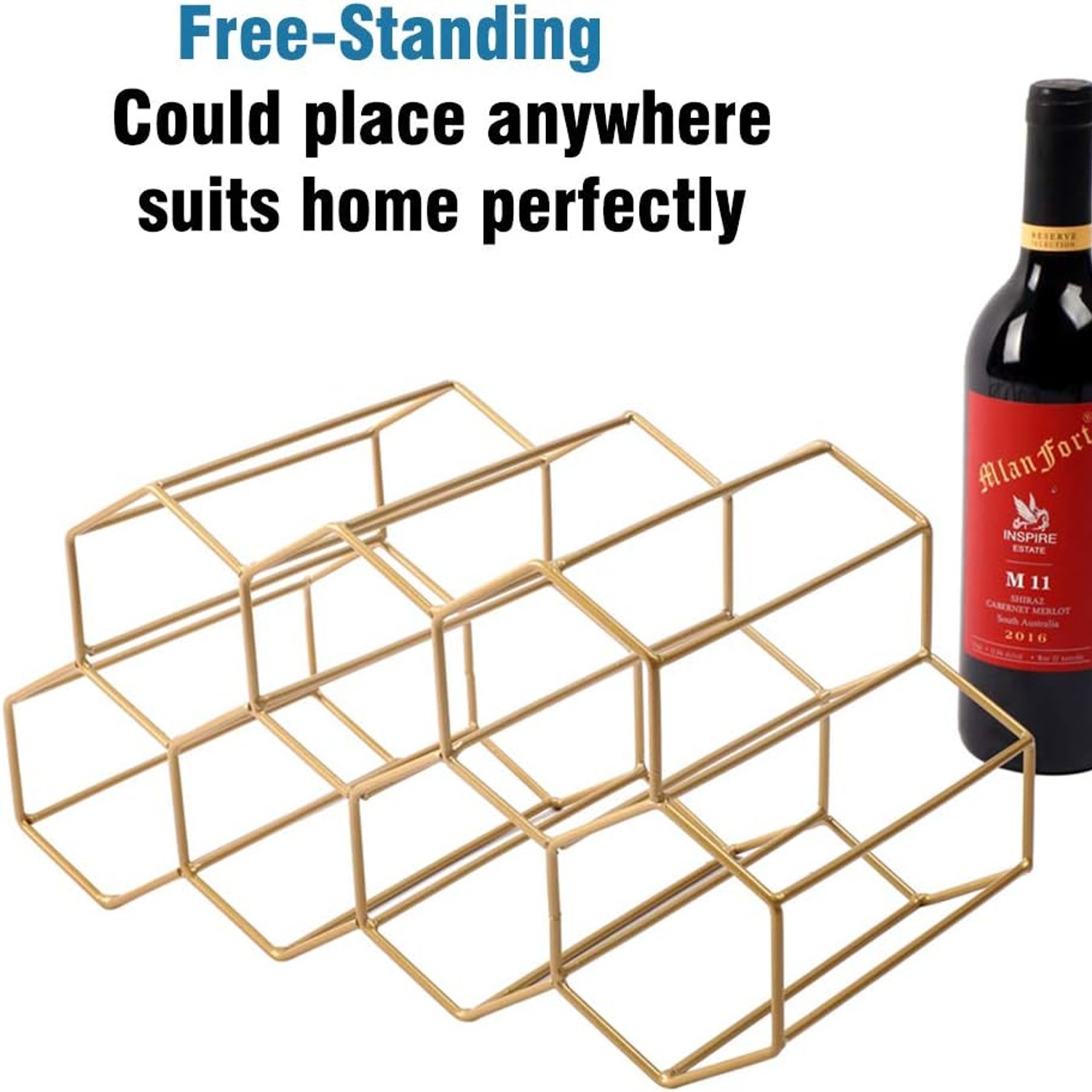
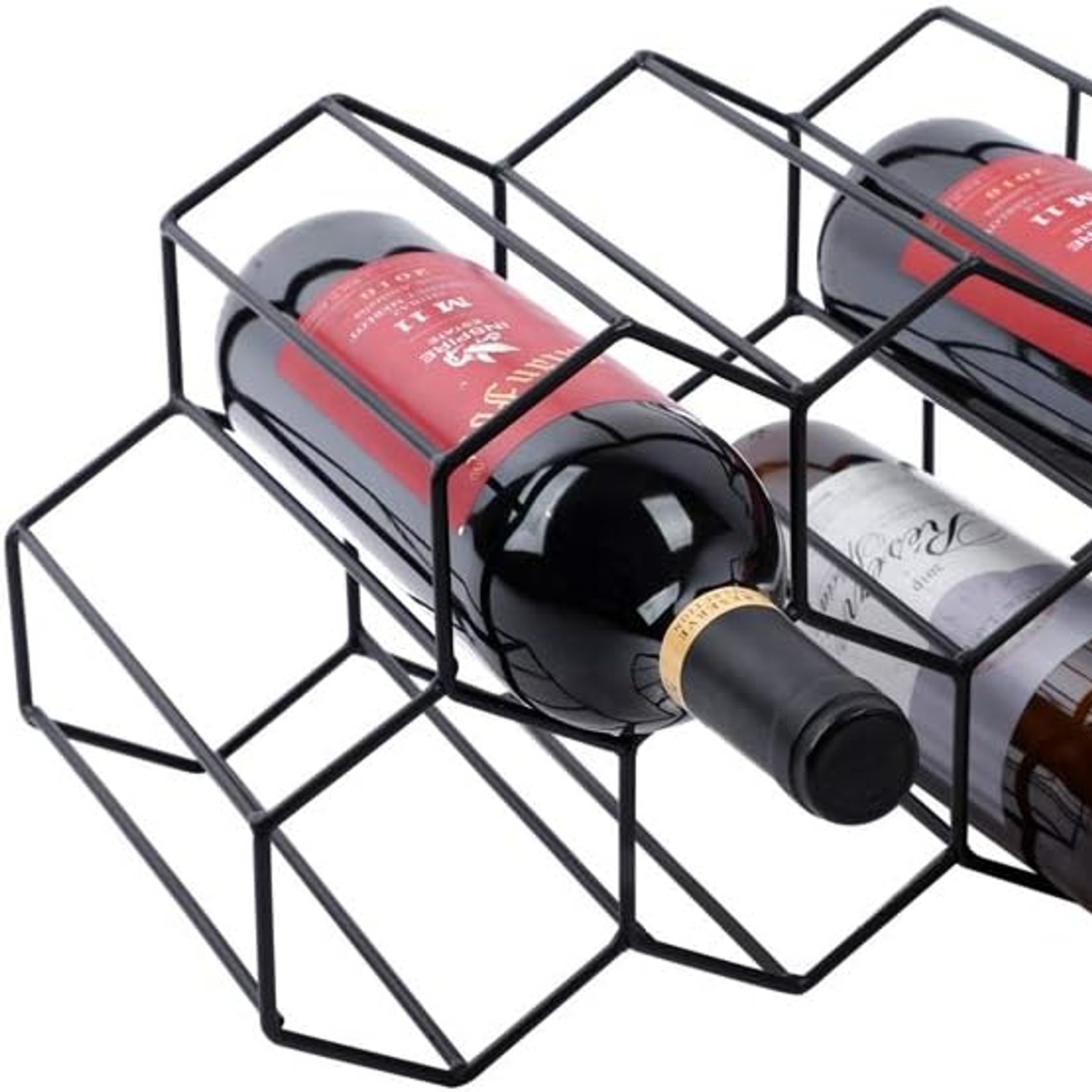
The frame on this Urban Deco rack is a honeycomb lattice. Each bottle sits inside its own six sided opening, supported all the way around rather than just resting on a bar. That is the key difference between a rack that feels solid and one that rattles.
Seven bottles sit inside the frame. The remaining two rest in the channel along the top, which is useful because top loading is where oddly shaped bottles go. A champagne bottle with a wide shoulder, a heavy Burgundy bottle, a dessert wine in an unusual shape: those go up top where there is no opening to squeeze through.
There are no moving parts, no clamps and nothing to adjust. The geometry holds everything. That is also why it arrives ready to use. The product details list required assembly as no, so there is no bag of bolts and no allen key hiding under the cardboard.
The frame is metal with a brushed gold finish. Brushed matters more than you might think. A high gloss gold shows every fingerprint and every water spot, especially in a kitchen where hands are rarely completely clean. A brushed surface scatters the light instead, so smudges disappear and the metal keeps a warm, even tone.
Who this size suits
At 36.8 cm wide, 19.3 cm deep and 19.3 cm high, this rack is firmly in small territory. That is the point. It is for people who want wine out and organised, not people building a cellar.
It suits renters and apartment dwellers particularly well. If you have a galley kitchen and about forty centimetres of spare bench, this works. It is also a good fit for a bar cart, where anything deeper than about twenty centimetres starts to overhang the shelf and look awkward.
It suits households that drink through their wine rather than collecting it. Nine bottles is roughly a month or two of normal consumption for a lot of people, which means the rack cycles rather than sits. If you are the sort who buys a case at a time and keeps bottles for years, you will want more capacity and a cooler, darker spot than a kitchen bench.
It also works well as a gift. Searching for the best wine rack gift for wine lovers usually turns up either novelty items or expensive cabinets. A plain, well proportioned nine bottle rack lands in between. It is useful on day one and it does not commit the recipient to a particular style of decorating.
Measuring before you buy
This is the step people skip, and it is the one that causes returns.
Width is the number that matters most. You need a clear run of 36.8 cm, and you want a little margin on each side so the rack does not sit tight against a wall or a kettle. Call it forty centimetres of usable bench.
Depth is next at 19.3 cm. Standard kitchen benches are around sixty centimetres deep, so depth is rarely the problem on a bench. It becomes the problem on a shelf. Many bookshelves and open kitchen shelves run about twenty five to thirty centimetres deep, which is fine, but narrow display shelves at fifteen centimetres are not.
Height is 19.3 cm, which matters if you want the rack to sit under an overhead cupboard or inside a cabinet. Measure from the shelf surface to whatever is above it, and add a couple of centimetres so you can tilt a bottle in rather than sliding it flat.
One more thing worth checking is bottle shape. The maximum bottle diameter is not specified in this product record, so if you mostly drink heavy bottomed Rhone or Champagne style bottles, plan on using the top channel for the widest ones and keeping the openings for standard shapes.
Where to put it
A kitchen bench is the obvious spot, and it is the one most people choose. Two things to avoid: direct sunlight and heat. Wine does not like either. A window sill that gets afternoon sun, or the stretch of bench immediately next to the oven, will age your wine faster than you want.
A sideboard or dining room shelf is often better. Cooler, darker, out of the cooking splatter zone, and still close enough for convenience. A bar cart is good too, provided the shelf is wide enough and the cart does not get wheeled around constantly.
Inside a cabinet is a quieter option. You lose the display value, but you get darkness and a stable temperature, which is better for the wine itself. If you go this route, measure the shelf carefully and remember you need room to lift a bottle out at an angle.
Keeping it looking good
Care here is genuinely simple. The manufacturer lists it as wipe with a damp cloth, and that is honestly the whole method.
Take the bottles out, run a soft damp cloth over the frame, then dry it with a tea towel. Drying matters more than washing, because standing water is what leaves marks on metal. Do this every couple of weeks and dust never gets a chance to build up in the corners of the lattice.
What to avoid: scouring pads, cream cleansers, bleach based sprays and anything described as heavy duty. All of these can dull or scratch a brushed finish, and once that happens it does not come back. If something sticky has dried on, a damp cloth and patience beats a hard scrub every time.
Wipe up wine spills quickly. A drip down the neck of a bottle will find its way onto the frame, and dried red wine is a nuisance to remove from any textured surface.
Common questions worth answering upfront
Do bottles need to lie down? For corked wine, yes, ideally. The cork stays in contact with the wine and keeps its seal. For screwcap wine it makes no real difference, but a horizontal rack is still the tidiest way to store them.
Can you load it unevenly? Yes, but load from the bottom openings first. Keeping the weight low makes the whole thing steadier, especially if you only have three or four bottles in it.
Will it mark a benchtop? Metal on stone or timber can mark if you drag it. Lift when you move it, and a few small felt pads on the base solve the problem permanently if you are worried.
The short version
This is a small, brushed gold metal rack that holds nine bottles, arrives assembled and cleans with a damp cloth. It measures 36.8 cm wide, 19.3 cm deep and 19.3 cm high, and weighs 748 g.
If you need wine off the bench and out of the pantry floor, and you have about forty centimetres of space to give it, this does the job without any fuss. Measure first, keep it out of the sun, wipe it occasionally, and it will quietly sort out your bottles for years.