
The complete guide
How To Choose A Countertop Wine Rack That Actually Fits Your Kitchen
The bottles-on-the-bench problem
Nearly every kitchen has the same situation. A few bottles come home from the shops, there is no obvious place for them, and they end up standing in a cluster behind the kettle or lying sideways in a cupboard where they roll every time you open the door. It is not a crisis. It is just untidy, and every so often a bottle gets knocked over.
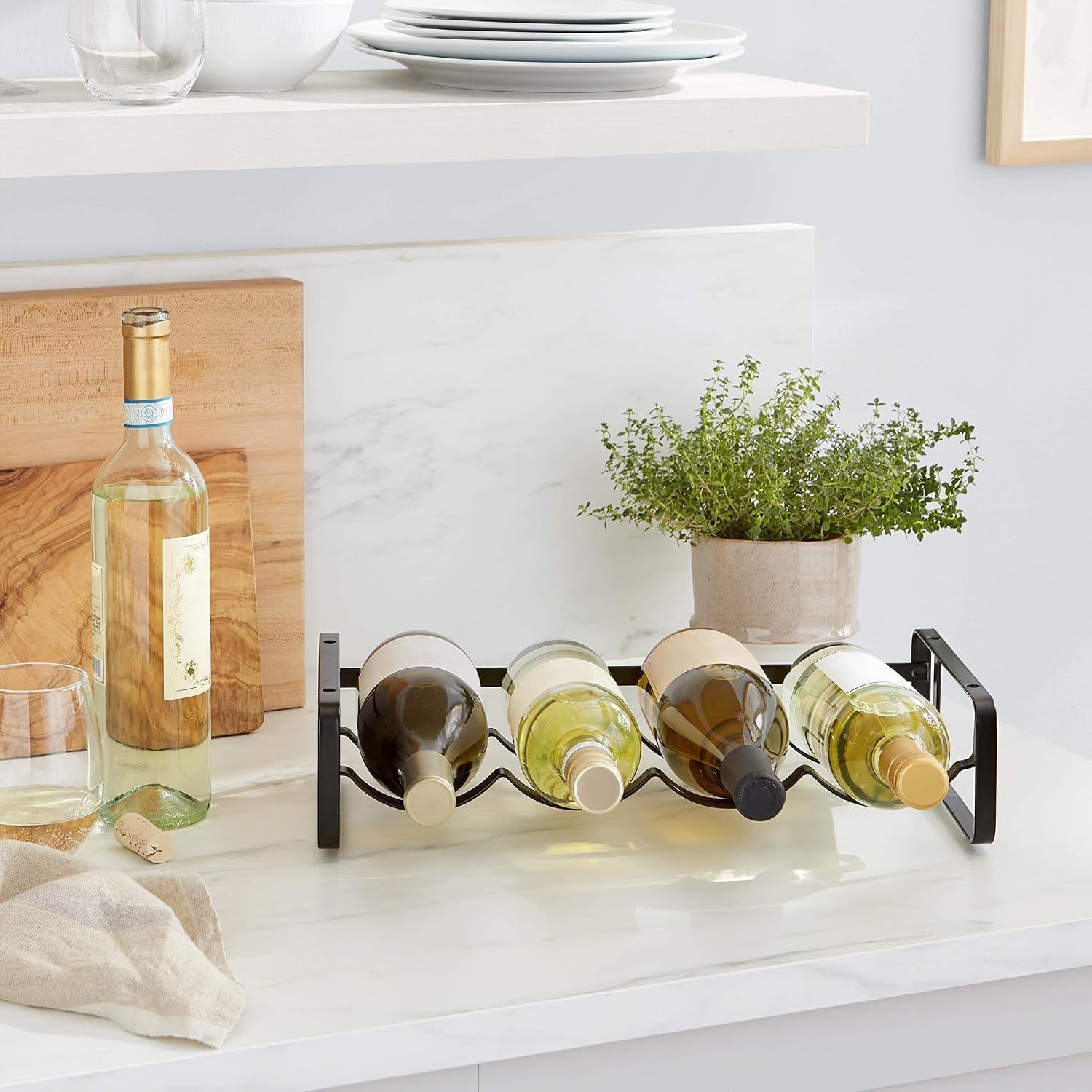
A countertop wine rack solves a small problem properly. It gives four bottles a fixed address, keeps them lying on their side, and takes up less bench than the cluster did. That is the whole job. You are not buying furniture or a climate cabinet, you are buying a bit of order for a corner of the kitchen.
How a wave-profile rack works
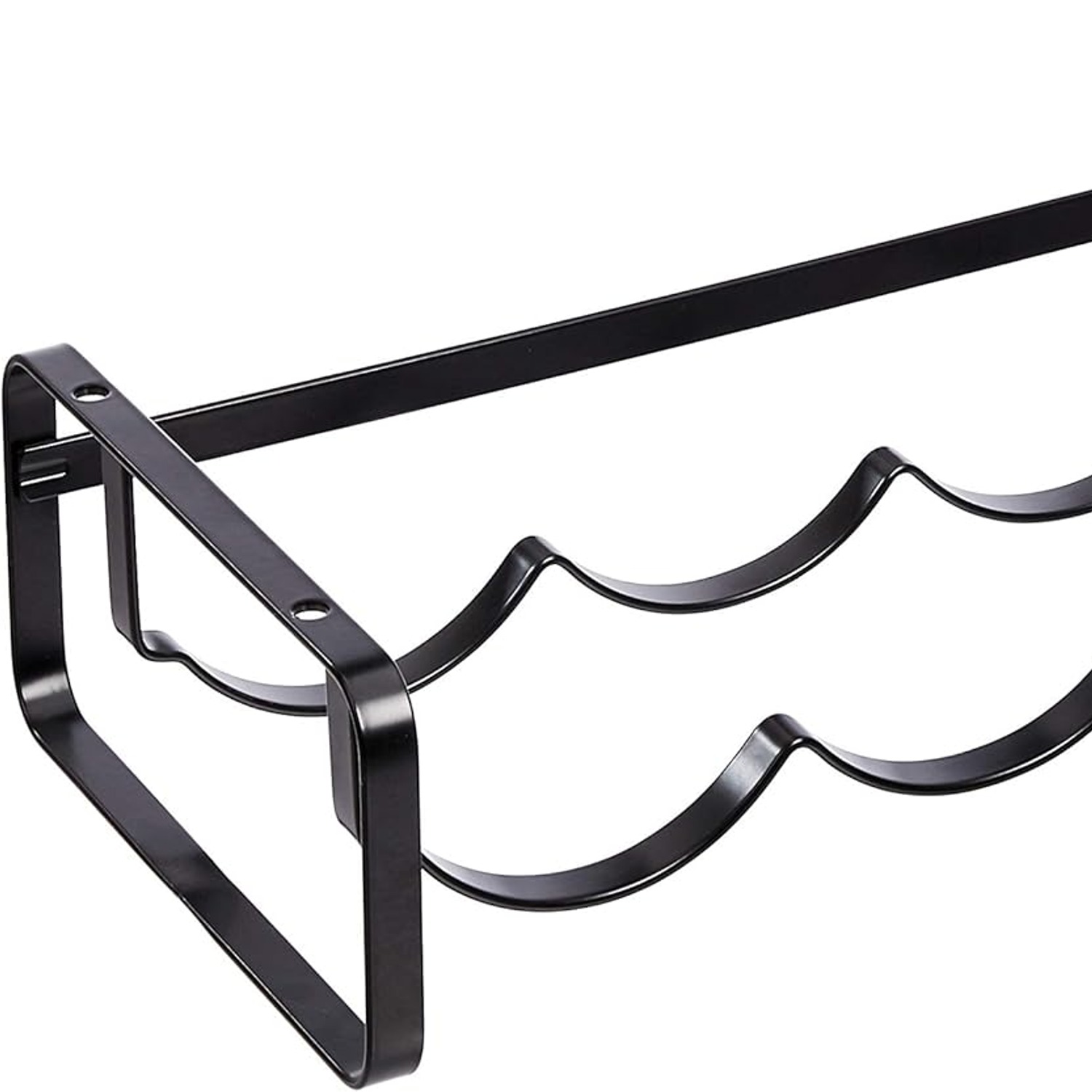
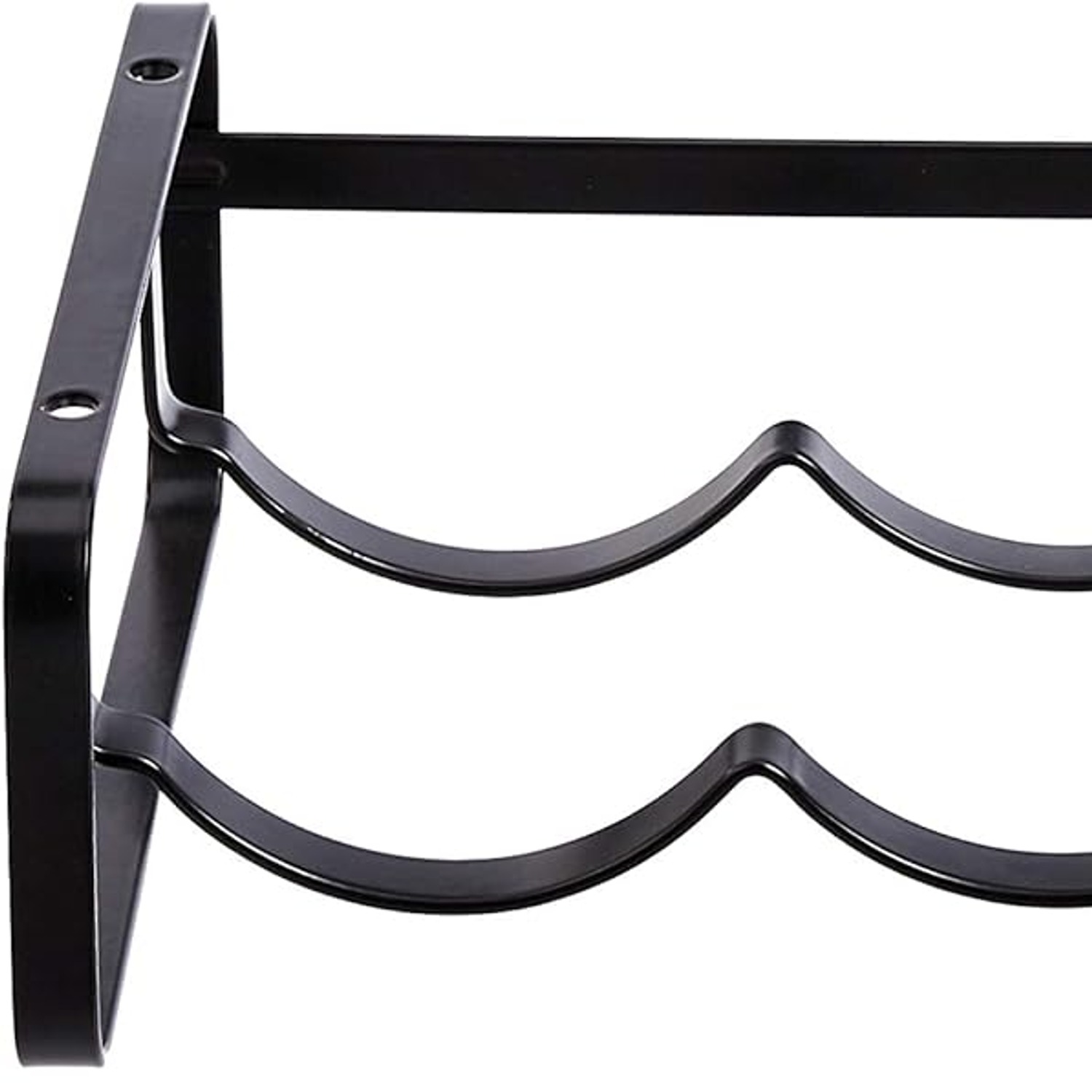
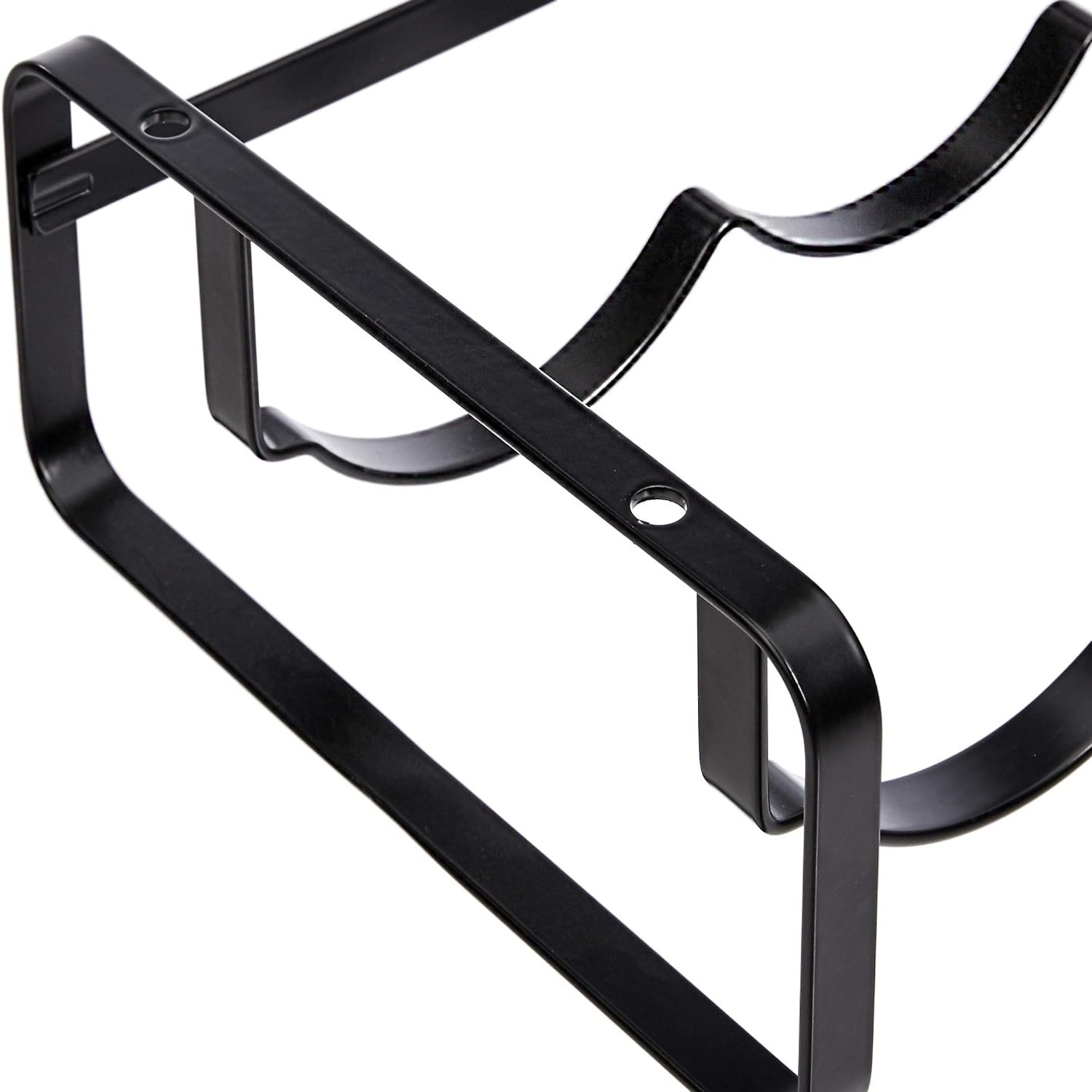
This rack is a single piece of metal alloy steel bent into a repeating wave. Each dip in the wave forms a cradle, and a bottle lies across two of those cradles. The curve does the work. Because the bottle sits lower than the ridges on either side, it cannot drift sideways, and a nudge to the bench does not start a chain reaction where one bottle pushes the next off the edge.
Flat-bar racks look similar from a distance but behave differently. A bottle on a flat bar is free to roll until something stops it, and that something is usually the next bottle or the lip of the rack. The recessed design removes that fidgeting entirely.
There is a second benefit to the shape. Because bottles lie down rather than stand up, the wine stays in contact with the cork. A cork that stays moist keeps its seal. A cork that dries out shrinks slightly and lets air creep in, which is how a bottle you were saving turns into something you pour down the sink. If your bottles are screw cap, this matters less, but side storage still saves vertical space.
Who it suits
If you drink a bottle or two a week and like to keep a small backup supply, four slots is about right. It covers the bottles you plan to open soon plus a couple you are hanging onto.
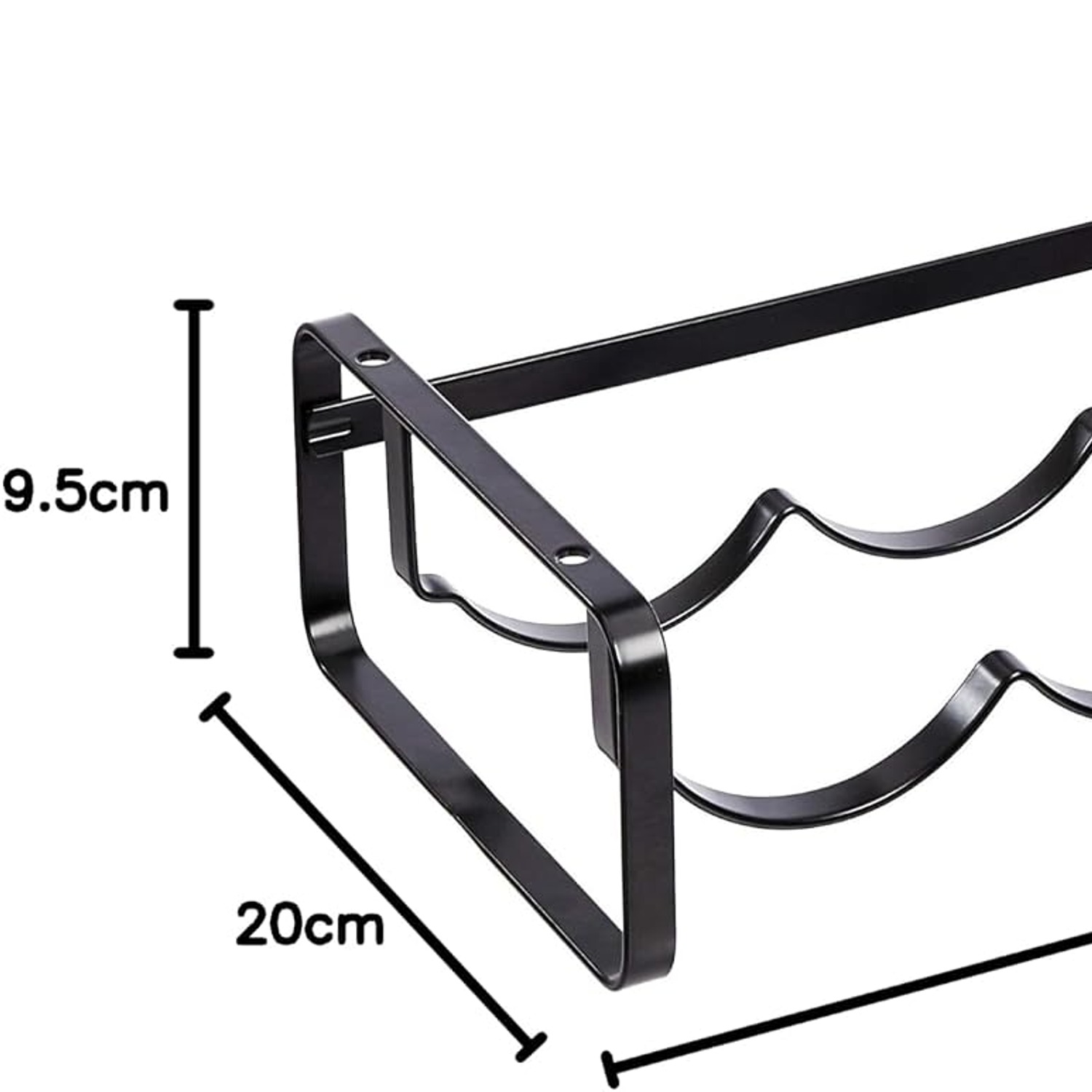
It also suits people with no spare floor space. Renters, apartment kitchens, studio flats and small galley kitchens all have the same constraint, which is that a floor-standing wine cabinet is simply not happening. A rack at 9.5 cm deep sits against a splashback or on a sideboard without eating into your working area. For many people looking for the best small wine rack, footprint is the deciding factor rather than capacity.
Then there is the growth case. The racks stack up to three tiers, so you can start with one and add more when your buying picks up. Twelve bottles across three stacked racks still occupies the same patch of bench as one. If you have been hunting for the best stackable bottle storage without committing to a piece of furniture, that is the appeal.
Working out whether it fits
Measure before you buy. The rack is 40 cm wide, 9.5 cm deep and 20 cm high. Width is usually the limiting factor on a bench, and depth matters if you are putting it on a narrow shelf or sideboard. Height matters if it is going inside a cupboard or under an overhead unit, especially if you intend to stack.
Think about where it sits, not just whether it fits. Wine does not like heat, light or vibration. The top of a fridge is warm and vibrates. Next to an oven is warm. A sunny windowsill is both warm and bright. A shaded corner of the bench, a pantry shelf or a sideboard in a cool room are all better. None of this matters much for a bottle you will open on Friday. It matters a lot for something you want to keep for a year.
Check your bottles too. Standard 750 ml wine bottles are what the recesses are shaped around. Sparkling bottles tend to be wider and heavier, so fit varies by producer. Magnums will not work. Some people use racks like this for olive oil and spirits, and round bottles of a similar size usually sit fine, while square ones do not.
Material and finish
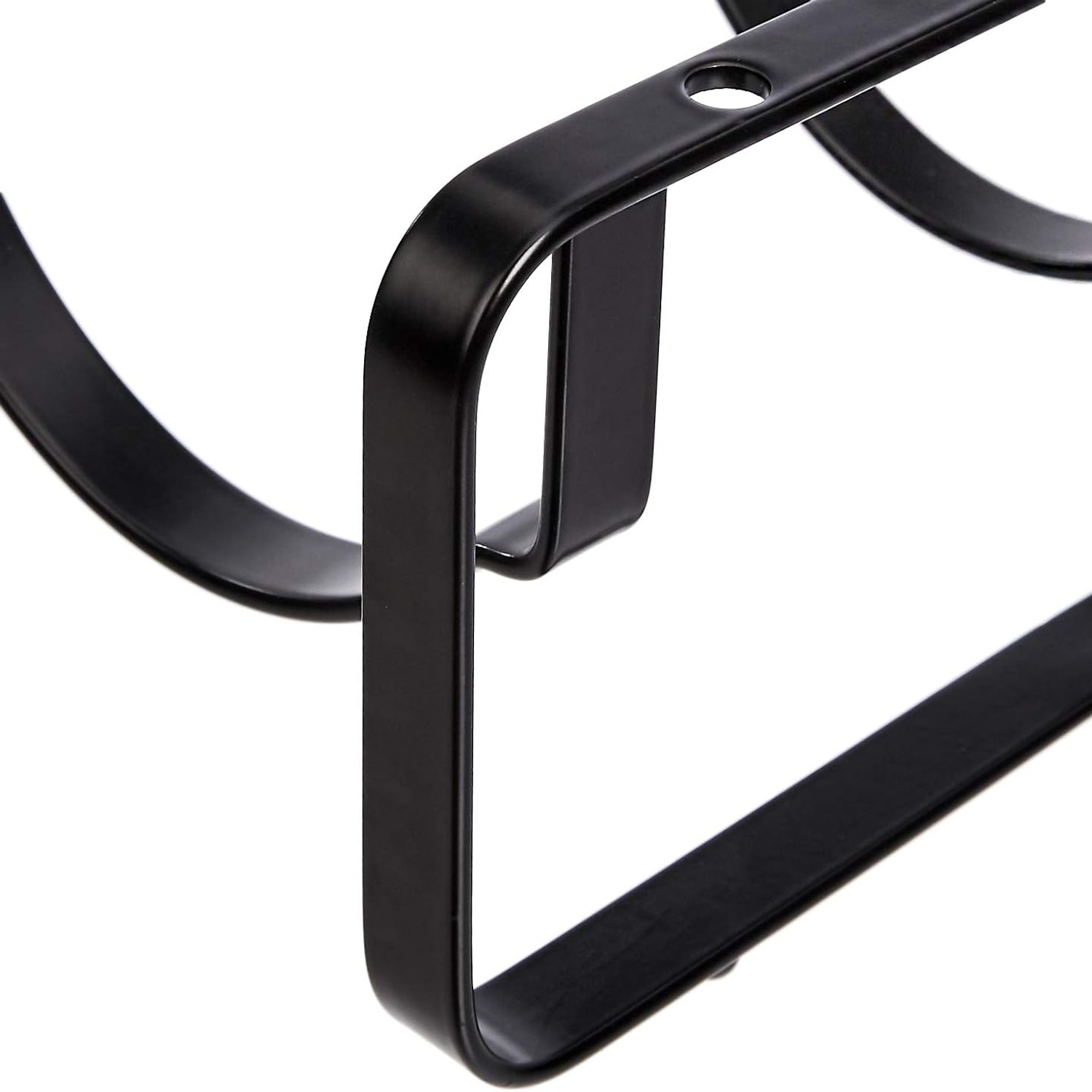
The listed material is metal alloy steel with a black colour and a modern style. The finish is described in the manufacturer details as possibly powder coated or polished, so the exact process is not confirmed in this record. What matters in daily use is that steel holds its shape under load. Four full bottles is roughly five kilograms, and a steel frame carries that without flexing or sagging the way some lighter materials do.
Black is an easy colour to live with. It disappears next to dark stone, contrasts cleanly against white or timber, and does not date. If you have been comparing options for the best metal wine rack to suit a modern kitchen, a plain black steel frame is the least likely to clash with whatever else is going on.
The rack weighs 635 grams on its own, which is light to lift but not so light that it slides when you tug a bottle free. Once loaded it is firmly planted.
Setup and daily use
There is no assembly. The rack comes as one piece, so there are no screws, no allen key and no diagram to interpret. Unpack it, put it on a flat surface and load it.
When you set it up, press down on each corner to check it does not rock. An uneven bench or a crumb under one edge can introduce a wobble you would rather find before four bottles are sitting on it. Load the first bottle and make sure it settles into the recess rather than perching on a ridge.
Keep it a little back from the edge of the bench. Not because the rack is unstable, but because bottle necks protrude and anyone walking past with a bag on their shoulder will eventually find them.
Keeping it looking right
Care is simple. The manufacturer instruction is to wipe with a dry cloth, which handles dust and the fingerprints that appear on any dark finish. For a drip or a sticky patch, use a barely damp cloth and dry straight afterwards so moisture does not sit on the metal.
Avoid the things that damage finishes. Scouring pads, abrasive cream cleansers and solvent-based sprays can all dull or scratch a coated surface, and once the coating is broken, bare steel underneath becomes vulnerable. The dishwasher is also a no, between the heat, the detergent and the long wet cycle.
Position helps with longevity. Steam from a kettle or a pot rising onto the same spot every day is the kind of slow moisture exposure that eventually shows. Shift the rack half a metre away from the steam path and the problem goes away.
The short version
This is a four-bottle countertop wine rack in black metal alloy steel, 40 cm wide and 9.5 cm deep, weighing 635 grams, with no assembly required. Wave-shaped recesses hold each bottle in place so nothing rolls or tips, bottles rest on their side to keep corks sealed, and the racks stack up to three tiers when four slots stop being enough.
Measure your bench, pick a cool spot out of direct sun, and wipe it with a dry cloth now and then. For a small collection in a kitchen without spare room, that is most of what you need from wine storage.