
The complete guide
How to Choose a 12-Bottle Wine Rack That Actually Fits Your Home
The problem with bottles that have nowhere to live
Most people do not set out to collect wine. It arrives. A couple of bottles from a dinner party, something picked up on a weekend away, a case bought because the price was good. Before long there is a cluster of bottles on the pantry floor, two more lying sideways in the fridge door taking up space meant for milk, and one standing on the bench where it has become part of the furniture.
The trouble is not just that it looks untidy. It is that you lose track. You buy a second bottle of something you already have because you cannot see the first one. You knock a bottle over reaching for the pasta. You open the wrong wine because the label you wanted was facing the wall.
A rack fixes all of that at once. Twelve slots, twelve visible labels, one place to look. That is the whole proposition, and it is a surprisingly satisfying one.
How a freestanding rack works
A freestanding wine rack holds bottles in a frame that stands on its own. No wall fixing, no cabinet to cut into, no landlord to ask. You put it down and it works.
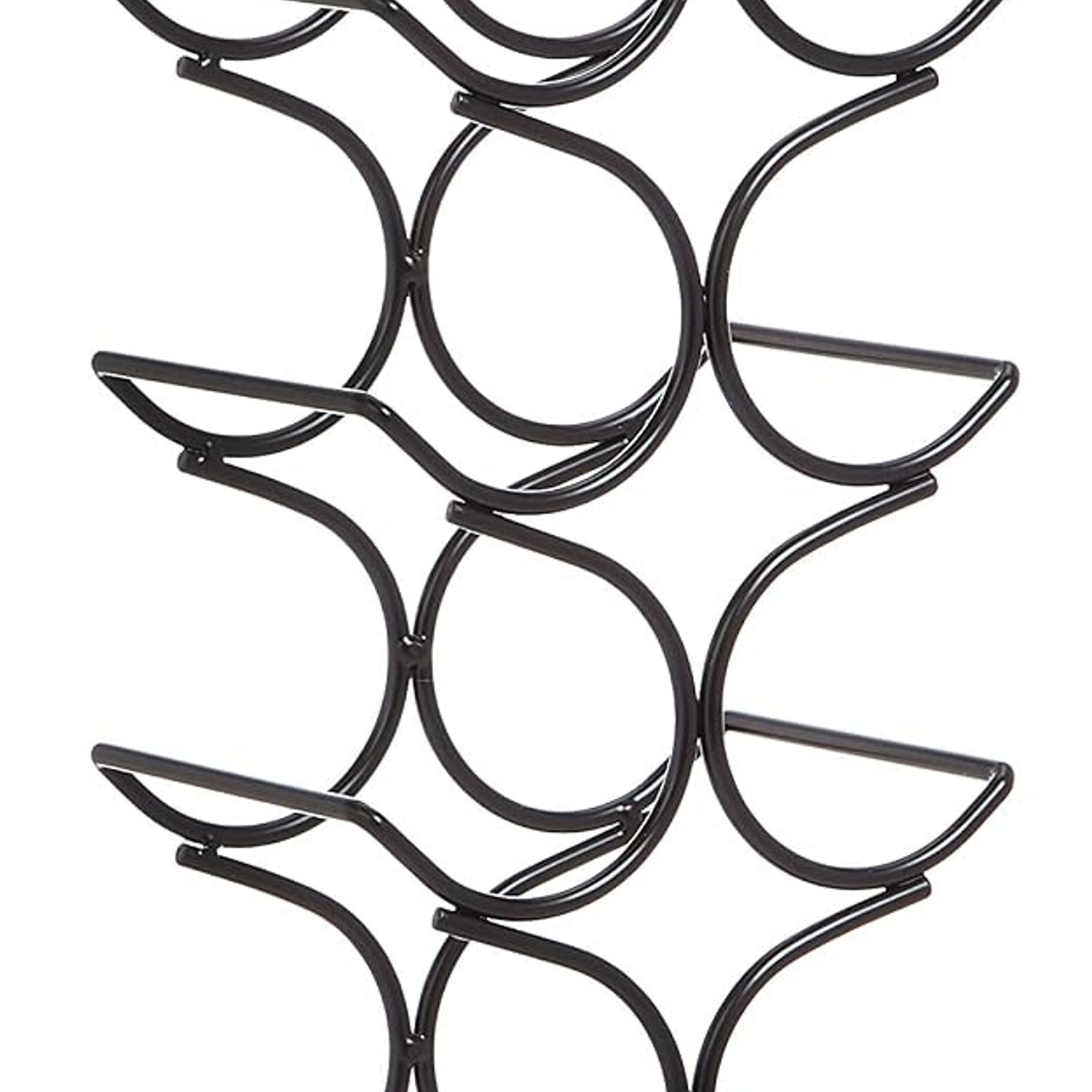
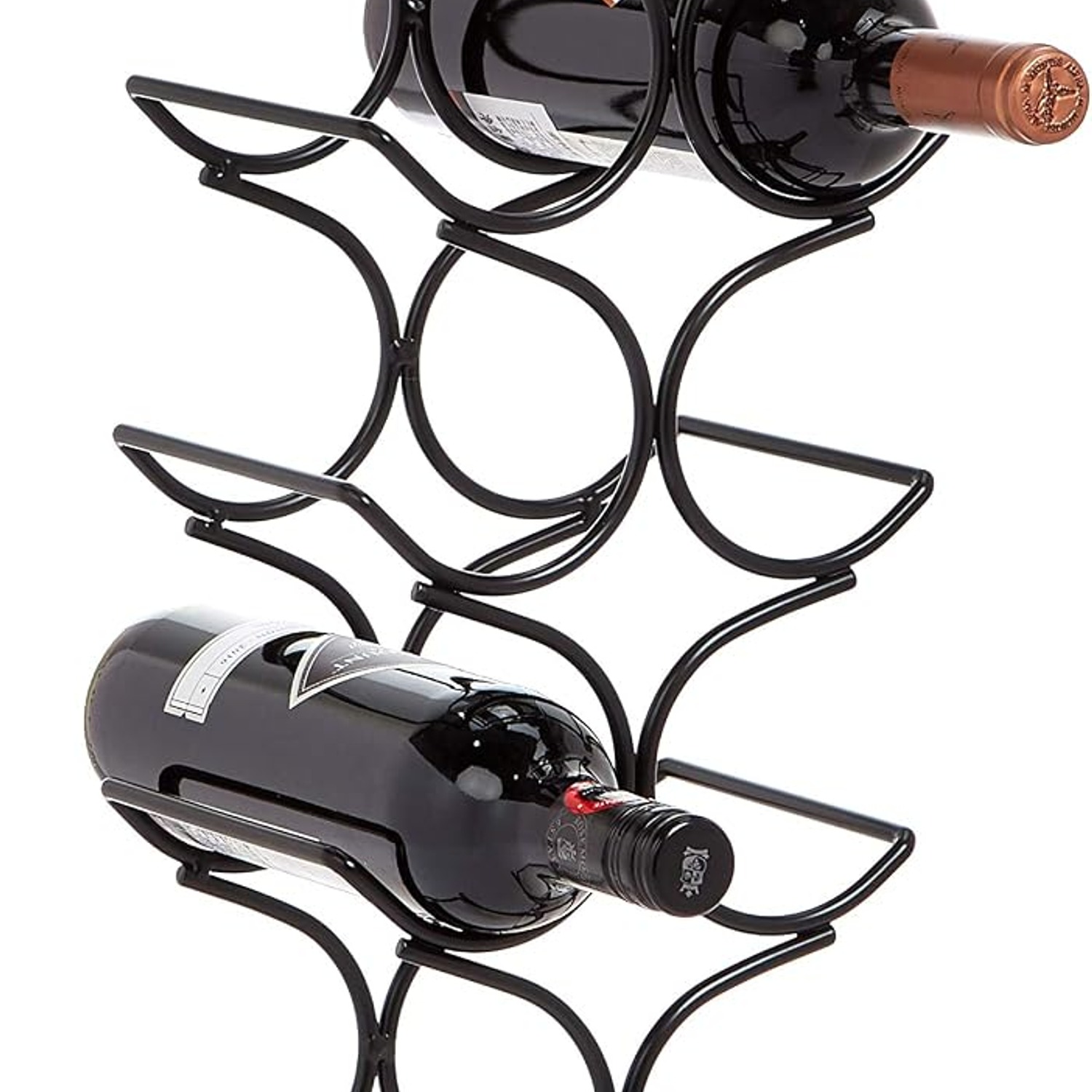
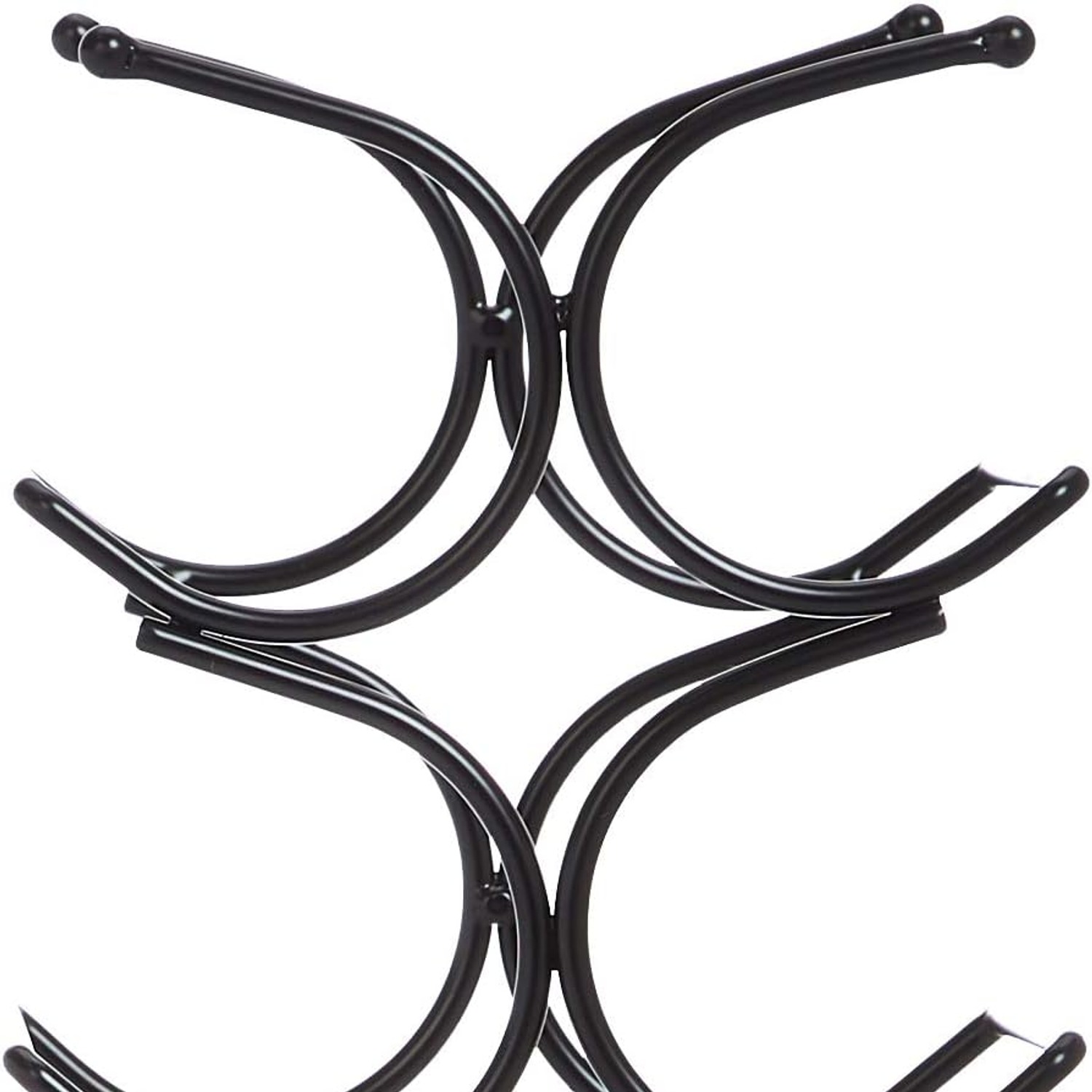
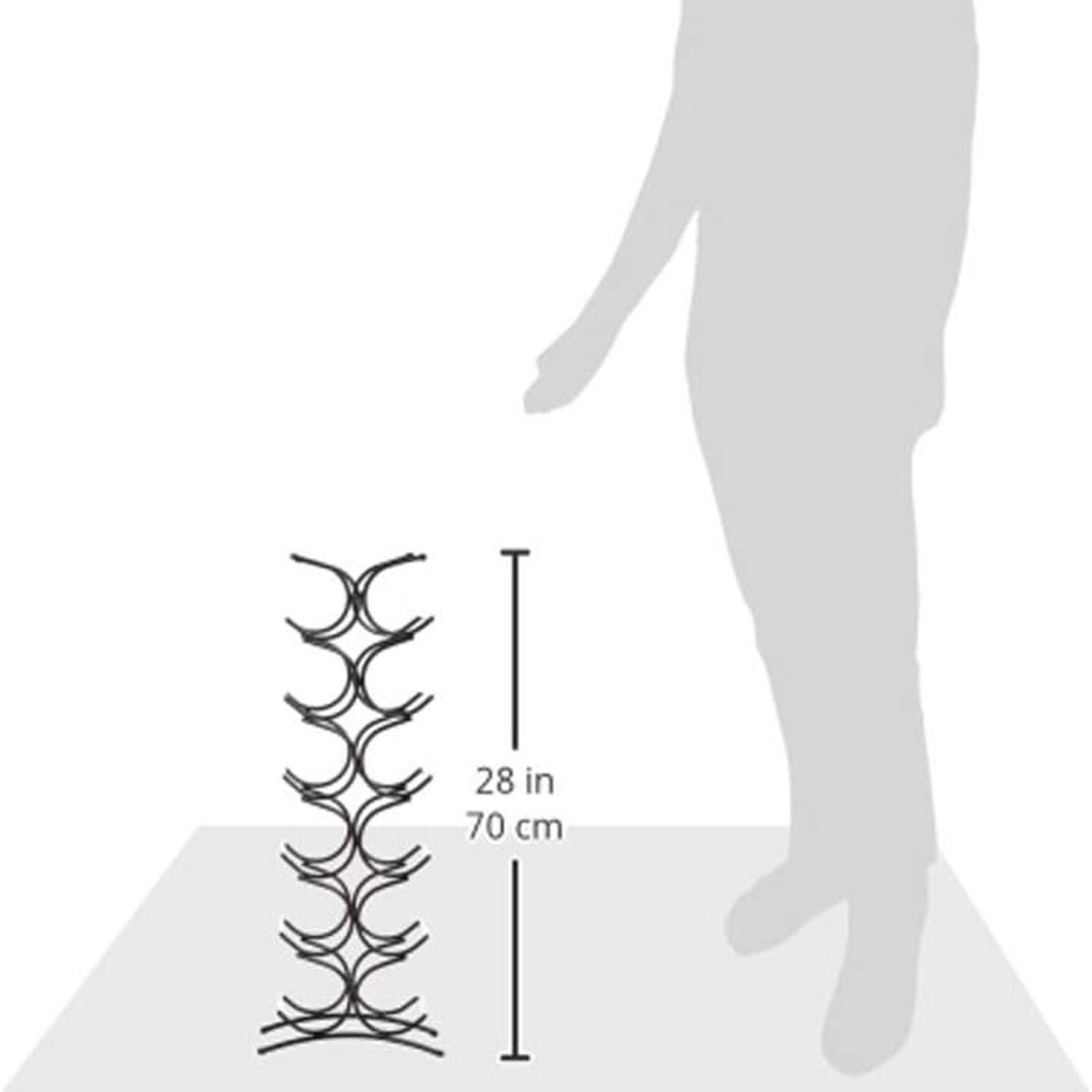
This one is a vertical design. Rather than spreading out across a benchtop, the slots stack upward through a frame that is 67.8 cm tall but only 16 cm deep and 24.9 cm wide. That ratio is the clever part. Twelve bottles in a space roughly the width of a cereal box.
Bottles rest in individual slots so they do not touch each other. That matters more than people expect. Bottles stacked in a pile scuff each other's labels, and a bottle that slips out of a pile can take two more with it. Separate slots also mean you can pull the one you want out without disturbing anything above or below it.
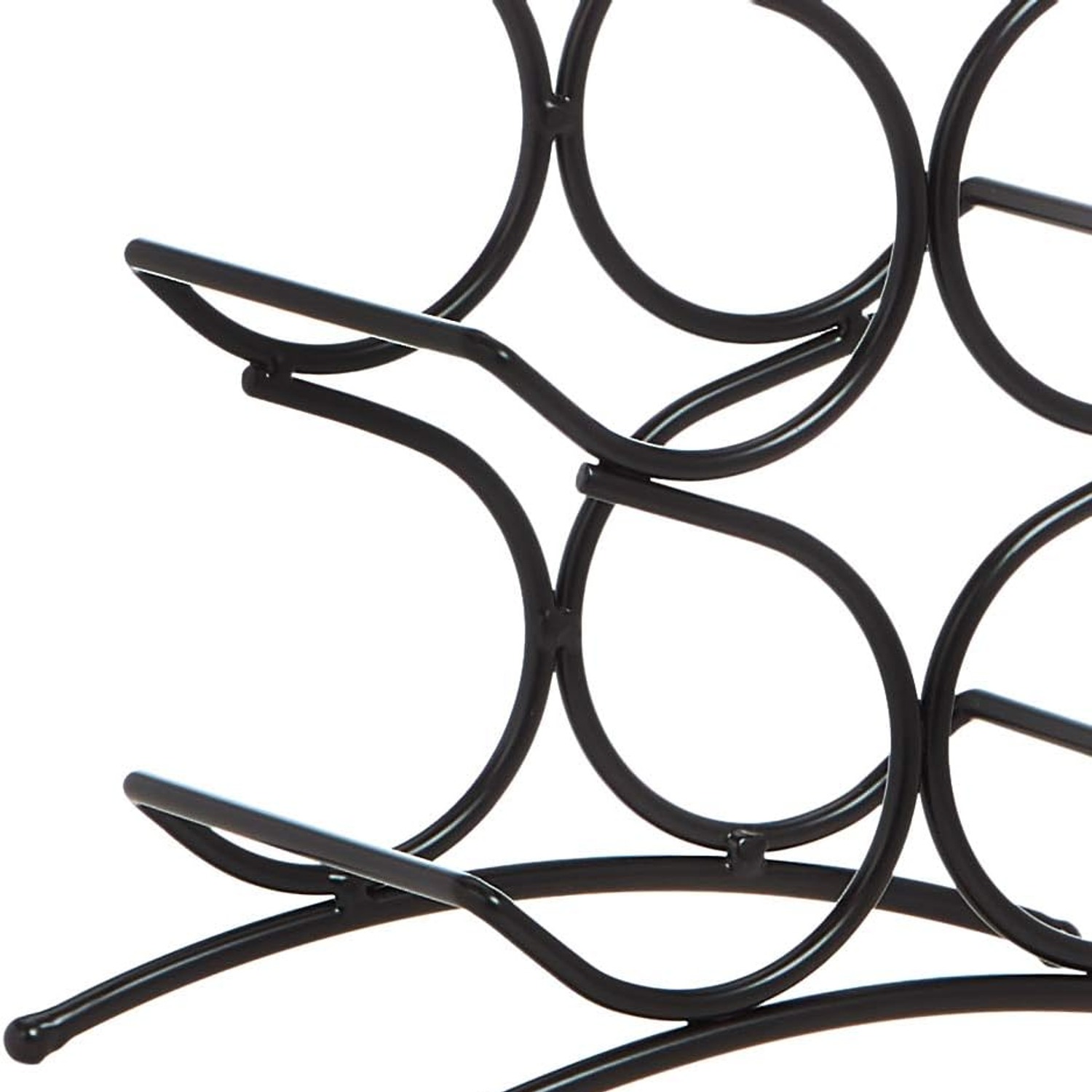
The frame is metal with a black finish. Metal matters here because of the loading. Twelve full bottles is roughly fifteen kilograms sitting on a narrow footprint. A metal frame handles that without flexing in the way that thin timber or wire can over time.
Who this suits
Apartment and unit dwellers. If you cannot drill into walls, a freestanding rack is the only sensible answer. The small base means it can live in a corner of the kitchen or beside a sideboard without taking over.
Renters. Same reasoning. Nothing to install, nothing to patch when you move, and it packs up as one piece to go in the back of the car.
People with a small but regular collection. Twelve bottles is a realistic household number. It is enough to keep a few reds, a couple of whites, a sparkling and something for cooking, without pretending you need a cellar.
Anyone tidying up a shared kitchen. Getting bottles off benches and floors frees real working space, and it means the kitchen does not look like the morning after a party.
It is less suited to serious collectors ageing wine over years. Open racks in a kitchen are exposed to light and to whatever temperature swings the room has. For bottles meant to sit for a decade, you want a cool, dark, steady spot, and ideally a purpose-built cellar or cabinet. For wine you will drink within the next few months, which is most wine in most homes, an open rack is perfectly fine.
How to choose: the measurements that matter
Here is the step most people skip, and then regret.
Height first. The rack is 67.8 cm tall. If it is going into a pantry, under a shelf, or in the base of a cupboard, measure the internal clear height, not the door opening. Shelves often sit a few centimetres lower than the frame suggests. Add a little clearance on top so you can lift bottles in and out without scraping knuckles.
Then depth. At 16 cm, this is slimmer than most racks. That is what lets it slide into the gap beside a fridge or along a bench end where a chunkier rack would stick out into the walkway. Check the gap you have in mind with a tape measure rather than eyeballing it.
Then width. 24.9 cm. If you are planning two racks side by side for twenty-four bottles, you need just over 50 cm of clear run.
Finally, the surface. Flat and level is the requirement. Tiled floors with a slight fall, thick carpet, and old timber boards that have cupped can all introduce a lean that a tall rack will exaggerate. A small shim under one foot usually sorts it out.
Bottle shapes and what fits
Standard 750 ml bottles are the design target, and the vast majority of wine comes in that format. Champagne and sparkling bottles are listed as suitable, though they are noticeably wider at the base than a slim Riesling bottle. If your collection skews heavily toward sparkling, load a few slots first and confirm the fit before you fill every space.
The outliers to watch are magnums, heavy Burgundy and Rhone bottles with thick punts, and some craft cider or beer bottles that come in odd diameters. These may not seat properly. It is not a flaw in the rack so much as a reality of how little standardisation there is in bottle shapes once you leave the mainstream.
Styling it so it disappears
Black is the easiest finish to live with. It sits quietly against pale timber, dark stone, white subway tile and painted plaster alike, because black reads as a shadow rather than a feature. If you want the rack to be furniture, there are showier options. If you want it to hold bottles and otherwise stay out of the conversation, black metal is the right call.
Load it with intent and it looks better still. Keep labels facing out, group by type so your eye can find things, and put the bottles you reach for most in the middle rows at easy height. Load from the bottom up when you are filling it so the weight settles low first.
Care, which takes about a minute
Dust is the only real enemy. Run a dry cloth over the bars every few weeks and the black finish stays looking like new. If something sticky lands on it, a barely damp cloth will lift it, then dry the spot straight away so moisture does not sit on the metal.
Skip the abrasive pads and the heavy-duty sprays. Nothing on a wine rack needs degreasing, and both can dull the finish. Keep it out of direct spray from a sink, and keep it indoors. It is an indoor product, and damp air will shorten the life of any painted metal frame left on a patio.
Once a year, pull the bottles out, wipe the frame properly and check it still sits level. That is the entire maintenance schedule.
The short version
Twelve bottles, 16 cm deep, 67.8 cm tall, 2.09 kg empty, and nothing to assemble. Metal frame, black finish, stands wherever you put it.
Measure your space first. Height catches people out more than width. If the gap is there, this is a straightforward way to get bottles off the floor and into something that makes your kitchen look organised rather than lived through. For most households, twelve slots is exactly the right number, and the slim depth is what makes it work where other racks will not go.