
The complete guide
How To Choose And Fit A Wall Mounted Wine Rack
The problem with storing wine on the floor
Wine takes up more room than people expect. A case in the corner of the kitchen, a few loose bottles on a shelf, one standing beside the toaster because there was nowhere else. Before long it is in the way, it is getting knocked, and you still cannot see what you own.
Floor-standing wine racks solve the organisation part and make the space problem worse. They eat a square of floor you cannot get back, they collect dust underneath, and in a small kitchen or apartment there simply is no square to spare.
Walls are the obvious answer, and most people get there eventually. The wall above a bench, beside a doorway, or at the end of a run of cupboards is dead space. Putting six bottles on it costs you nothing you were actually using.
How a vertical six tier rack works
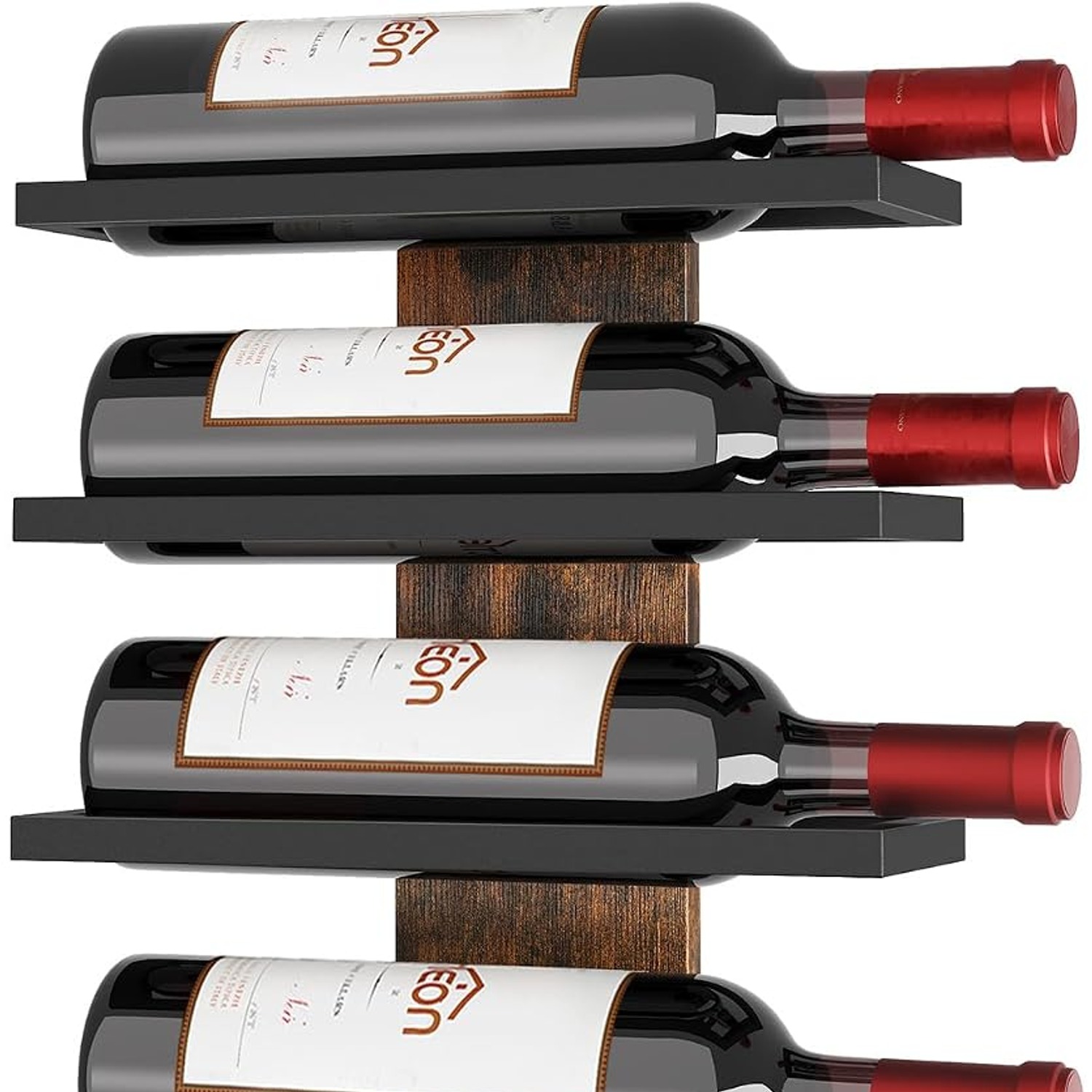
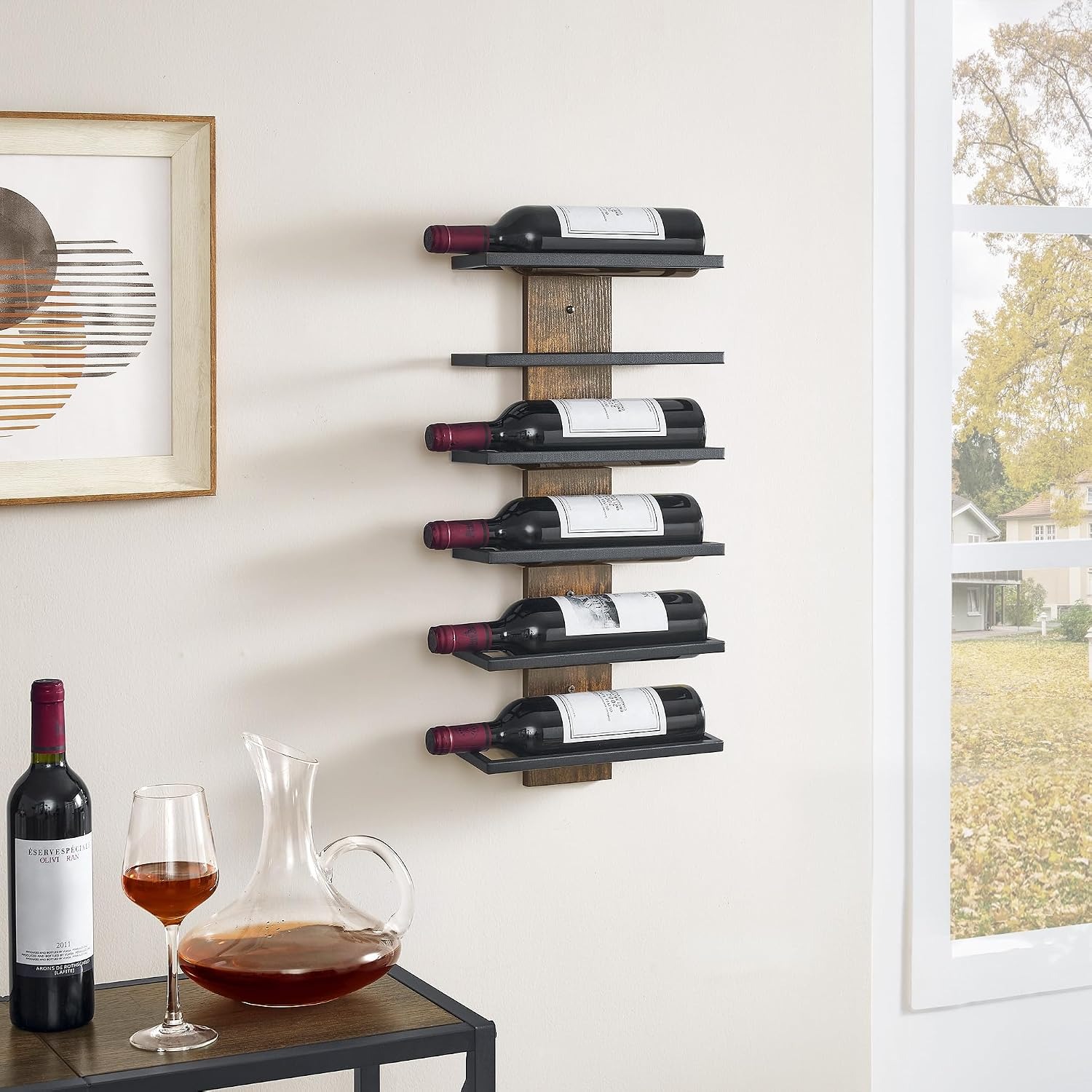
This rack takes a different approach to the wide horizontal designs you see most often. Instead of a grid of cradles spreading across the wall, it stacks six tiers one above the other in a single column 27.5 cm wide and 60 cm tall.
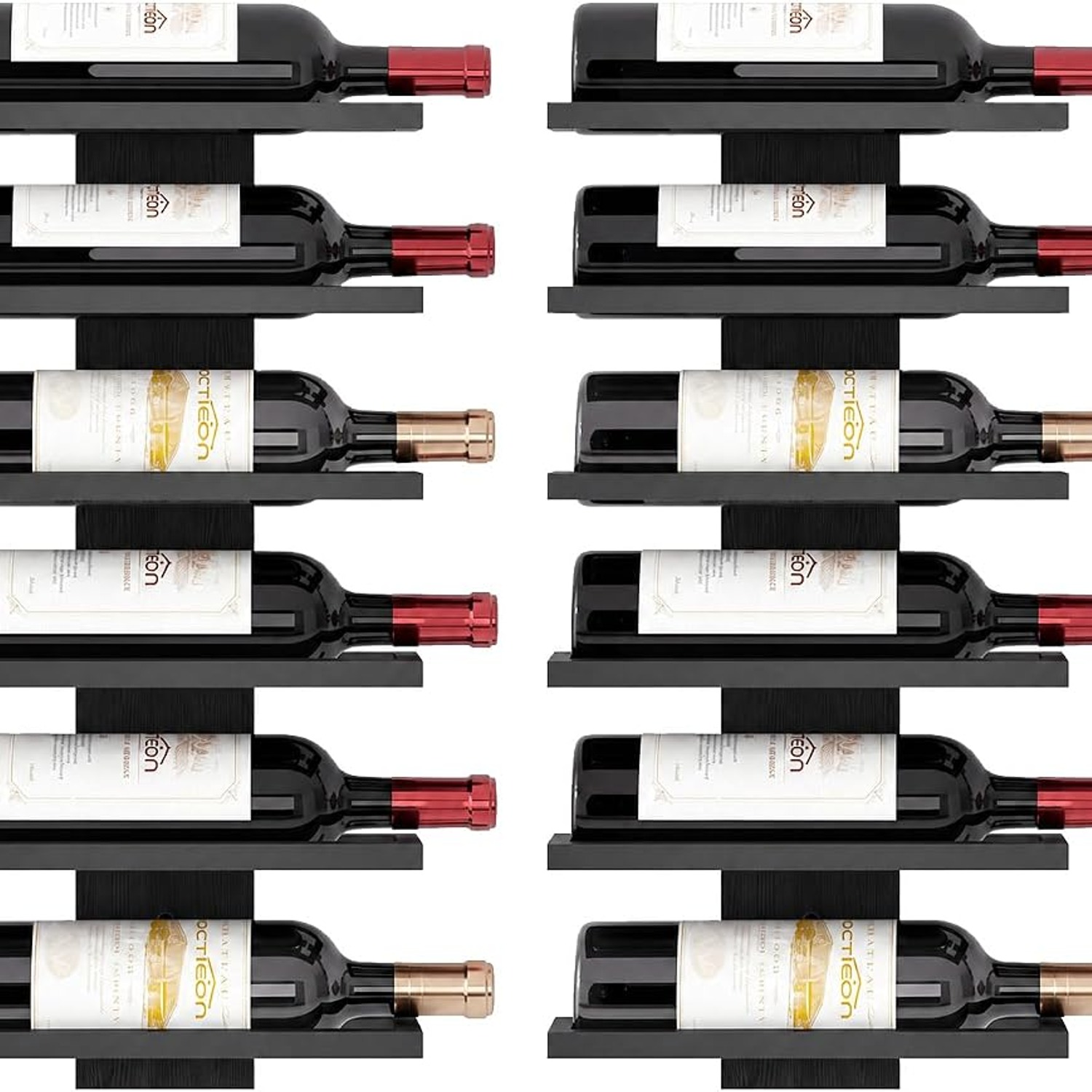
Each tier holds one bottle, cradled rather than stood upright. The timber shelf supports the body of the bottle and the metal bracket keeps it from sliding. Because the bottles lie across the rack rather than pointing out of it, the whole thing only projects 10.2 cm from the wall.
That depth number is worth paying attention to. Ten centimetres is less than the width of a mug. You can walk past it in a narrow kitchen without catching your arm, which is not true of racks that stick out 20 or 30 cm.
The rack itself weighs 1.26 kg empty, and it is built from wood and metal with a rustic brown finish. The timber brings grain and warmth, the metal handles the structural load. It is a common combination because each material does what it is good at.
Who it suits
Apartment dwellers get the most obvious benefit. When your whole kitchen is three metres long, vertical storage is not a style choice, it is the only option left. A column of six bottles on the wall is six bottles off the bench.
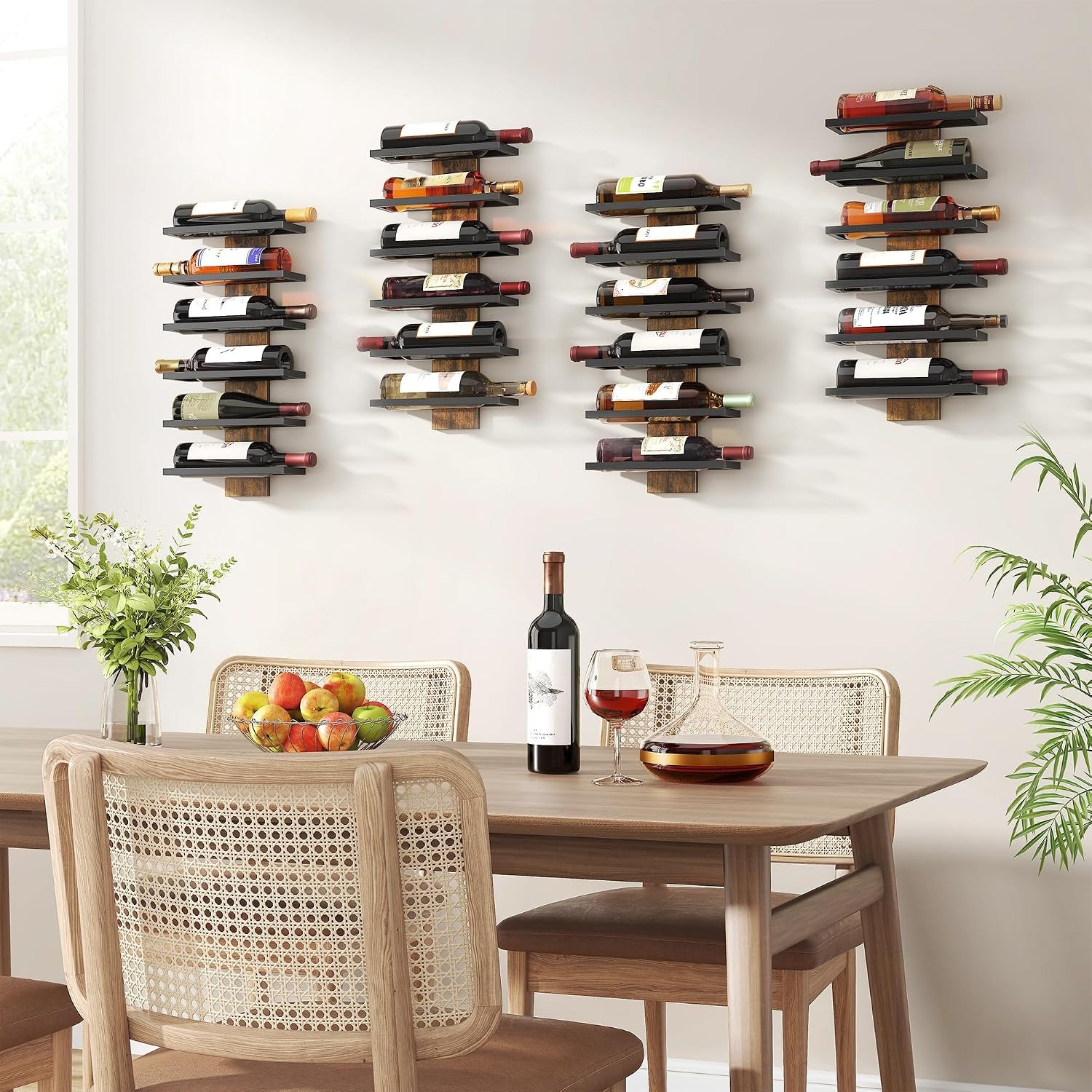
It also works for people who want their wine visible. There is a difference between storing wine and displaying it, and a wall rack does both. If you enjoy the look of labels and the colour of the glass, hiding them in a cupboard defeats the point.
Renters can use it too, with the caveat that it screws into the wall. The holes are small and easy to fill, but check your lease before you drill. Plenty of landlords are fine with a handful of small fixings, particularly if you patch them on the way out.
It suits gift buyers as well. A housewarming present that is practical, looks good, and does not need the recipient to have spare floor space is a fairly safe bet. People shopping for the best wine rack for apartments usually end up looking at narrow vertical designs for exactly this reason.
Who it does not suit: anyone with a serious collection. Six bottles is a working selection, not a cellar. If you are storing fifty bottles, you need something else, though a few of these on a wall can still handle the rotation you drink from week to week.
Choosing the right spot
Start by thinking about reach. You want the top tier somewhere you can get to without a stool, and you need headroom above it to lift the bottle neck clear. Somewhere between chest height and a bit above eye level usually works.
Think about light next. Direct sunlight is not kind to wine. It warms the bottle, it fades labels, and over time it affects what is inside. A wall that gets afternoon sun through a window is the wrong wall. An interior wall, a shaded corner or a hallway is better.
Heat matters for the same reason. Avoid mounting directly above an oven, beside a radiator, or on the wall a fridge compressor backs onto. Steady, moderate temperature is what you are after, and most rooms away from appliances give you that.
Then consider traffic. Even at 10.2 cm deep, a rack in a doorway will eventually meet a shoulder. Pick a stretch of wall people walk past rather than squeeze through.
Getting it on the wall
Assembly comes first. The rack arrives flat with an installation guide and installation tools in the box, and the parts are numbered. Lay everything out, check it against the guide, and work through in order. It is not a long job.
Fixing it up is where the thinking happens. The rack is light, but six full bottles are not, and the wall has to carry the lot. Timber studs are the strongest anchor point if one lines up with where you want it. A stud finder is worth borrowing.
On plasterboard without a stud behind, use proper plasterboard anchors rated well above the load you expect. Standard screws straight into plasterboard will not hold a loaded rack for long. On brick or concrete, use masonry plugs and a masonry bit.
Use a spirit level or a level app, and mark your holes before you drill. A rack that is a degree off looks worse once bottles are in it, because the bottle necks exaggerate the angle. Measure twice.
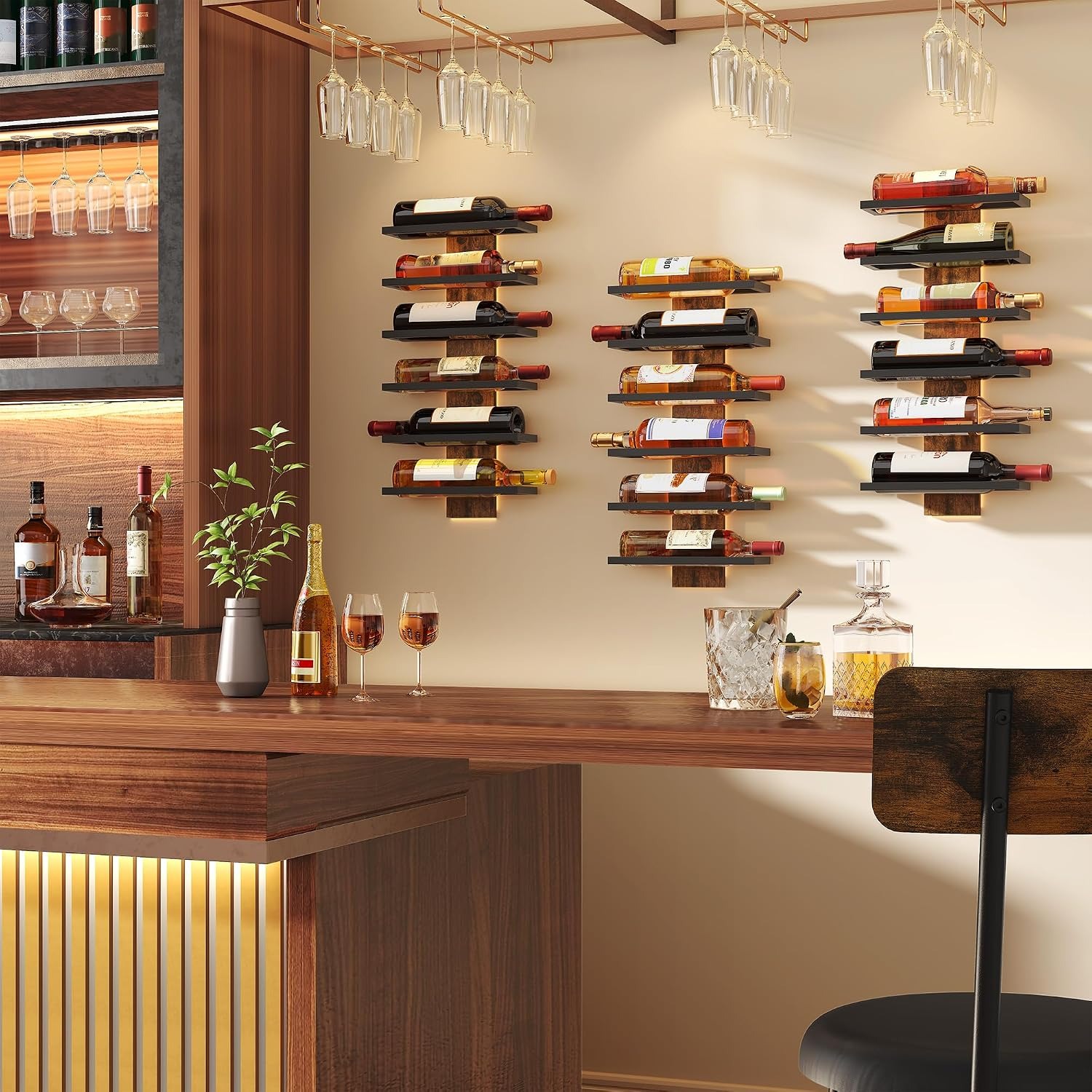
If you are mounting two racks side by side, mark a single level line across both and work from that. Lining up tiers across units makes the difference between looking planned and looking improvised.
Keeping it looking good
Care is simple. Wipe the timber and metal with a dry cloth to lift dust, which collects faster on a horizontal shelf than people expect. For a sticky ring from a drip, a barely damp cloth works, but dry the timber straight after.
Keep harsh solvents and abrasive pads away. They dull metal finishes and strip the look from timber. A dry cloth handles nearly everything, and mild soap on a damp cloth covers the rest.
Check the fixings every few months. Screws can work loose slowly, particularly if the rack gets regular use and the wall takes vibration from a nearby door. A quick turn with a screwdriver is all it takes.
If you want the timber to stay even in tone, avoid parking the rack where one half catches sun and the other does not. Uneven light over a year or two can show.
Other things people use it for
The shelf size that suits a wine bottle also suits a rolled towel. Mounted in a bathroom or laundry, the same rack becomes towel storage, which is why some buyers put one in each room and never fill either with wine.
It works for tall bottled oils and vinegars in a pantry, too, as long as they sit stably in the cradle rather than rocking. Anything round with a narrow neck tends to behave.
That flexibility is handy if your needs change. A rack you bought for wine is not wasted if you stop drinking it.
The short version
This is a narrow vertical rack that holds six bottles in a strip of wall 27.5 cm wide, 10.2 cm deep and 60 cm tall. It is built from wood and metal in a rustic brown finish, weighs 1.26 kg empty, and arrives flat with an installation guide and tools.
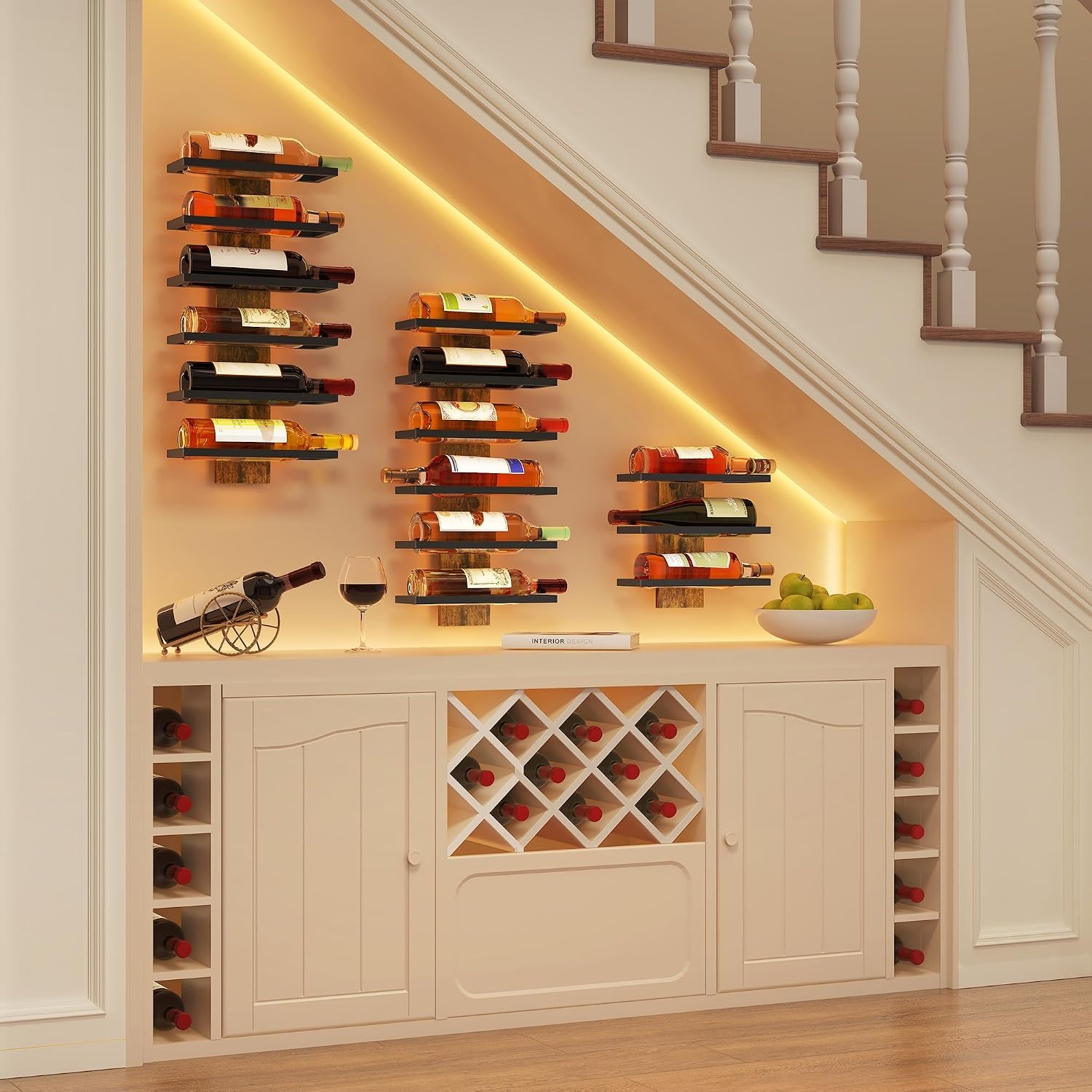
It suits small kitchens, apartments, dining rooms and hallways where floor space is already spoken for. It is not a cellar solution, and it is not extendable, but two or three side by side cover a bigger collection neatly.
Pick a cool, shaded wall away from direct sun and heat, use anchors suited to what you are drilling into, and get it level before you tighten anything down. Do that and it will sit there quietly doing its job for years.