
The complete guide
How To Choose A Countertop Wine Rack That Actually Fits Your Kitchen
The problem with loose bottles
Wine has a habit of piling up in awkward places. A couple of bottles behind the toaster, a few more standing in the pantry door, one in the fridge that nobody can reach past the milk. None of it is a disaster, but it adds up to a kitchen that feels cluttered and a wine collection you cannot actually see.
That last part is the real cost. If you cannot see what you have, you forget about it. The bottle someone brought to dinner in March is still there in October, hidden behind the vinegar. Meanwhile you buy another of something you already own because you could not remember.
A countertop wine rack fixes a narrow problem very well. It gives bottles a home, keeps them horizontal, and puts every label where you can read it. That is most of what a small collection needs.
How a three tier rack works
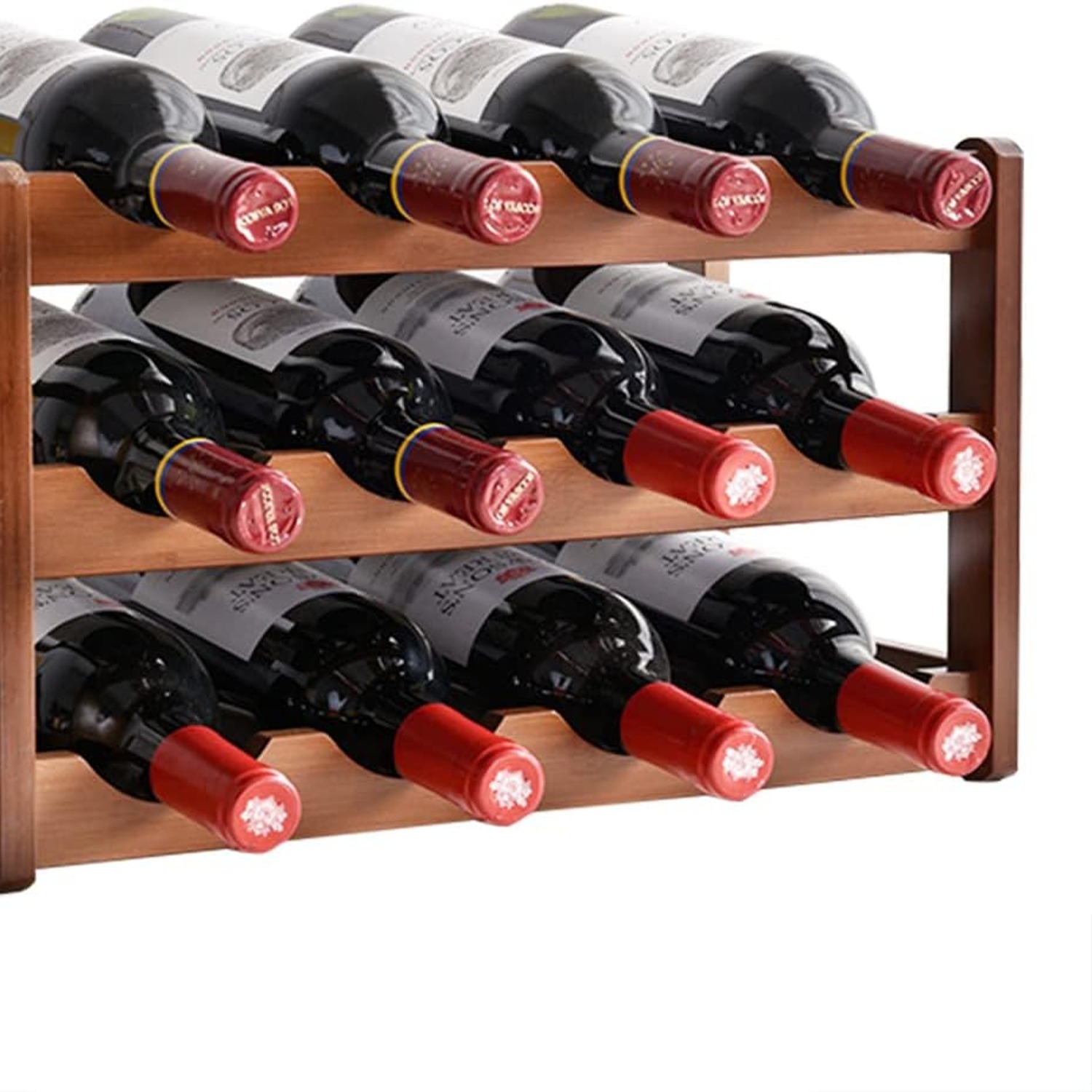
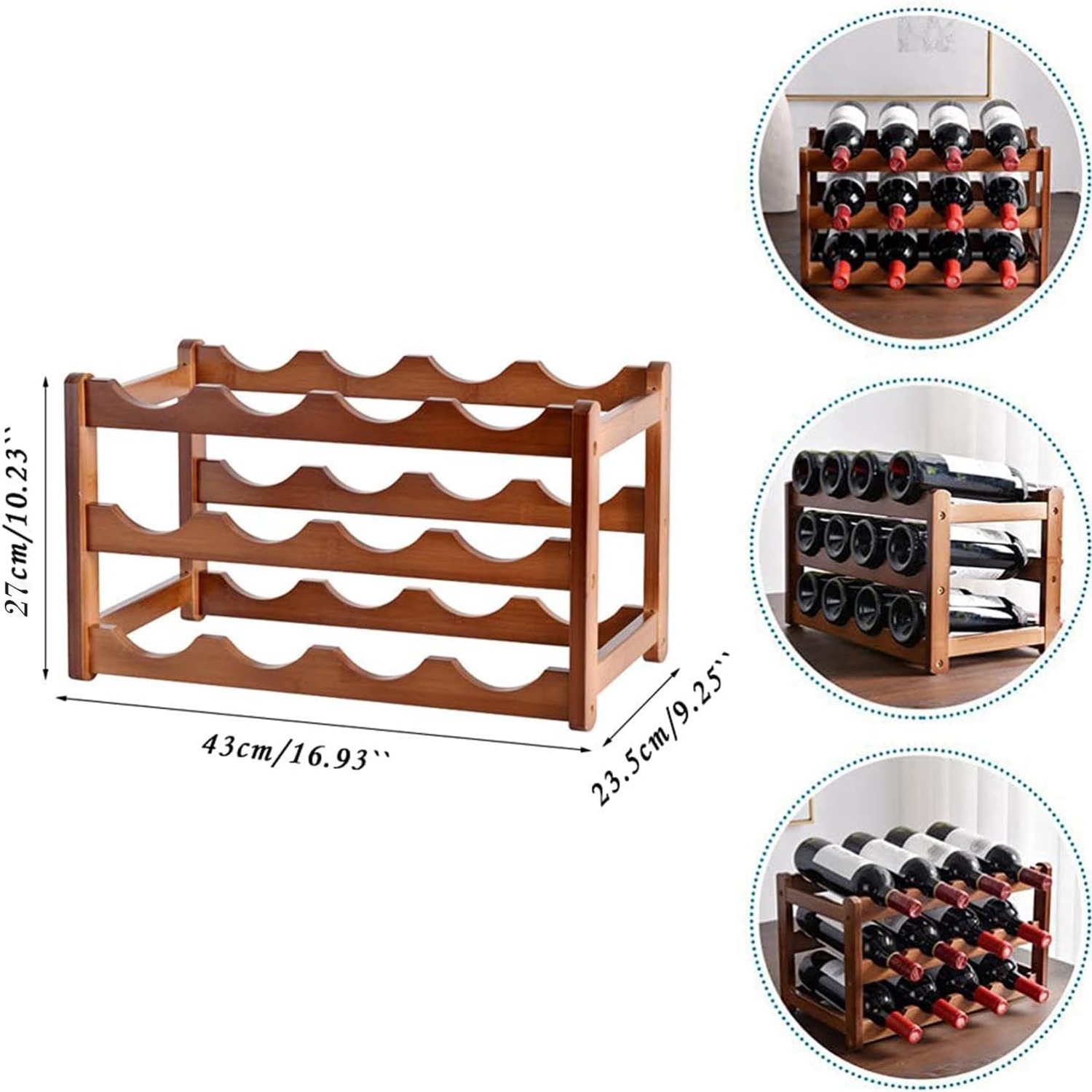
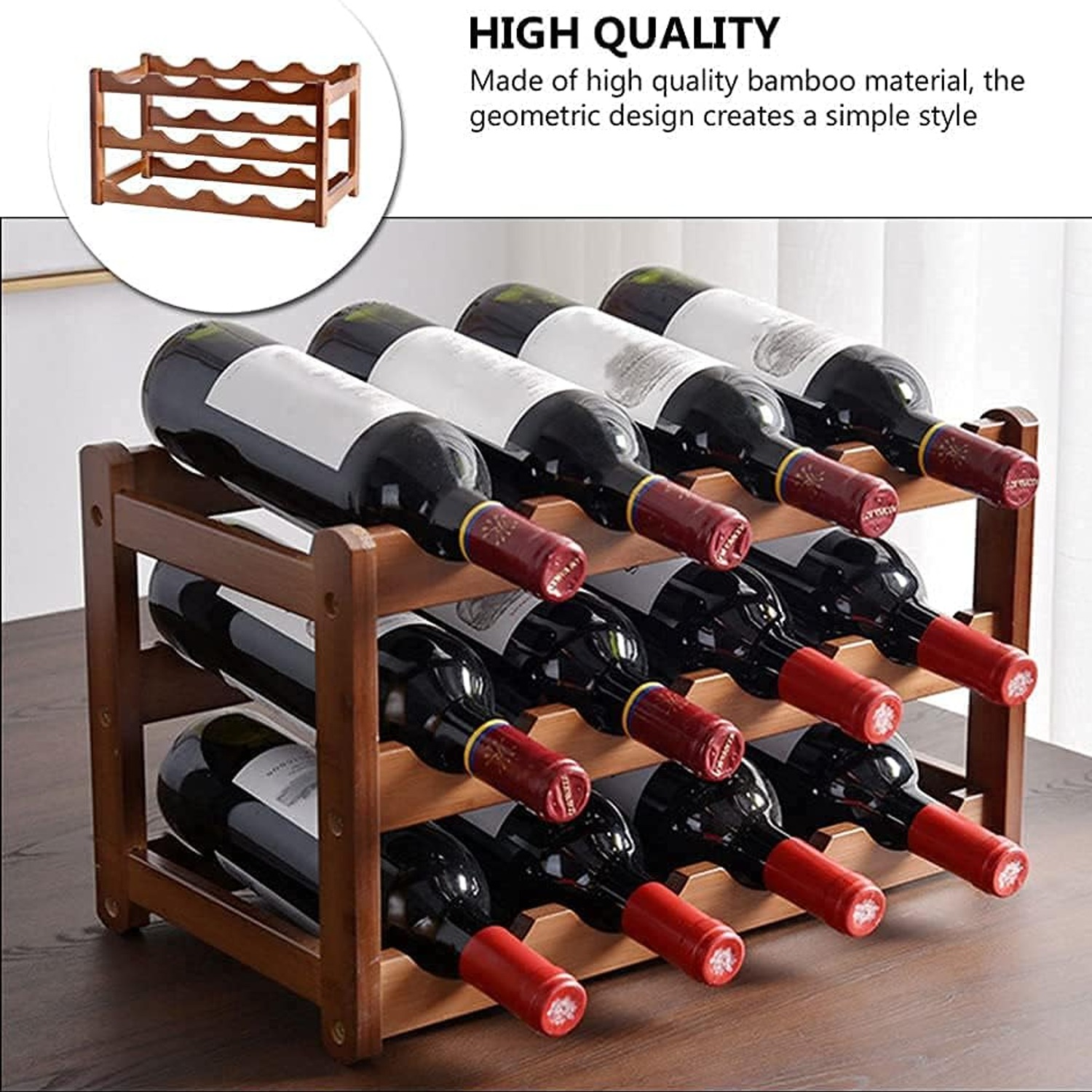
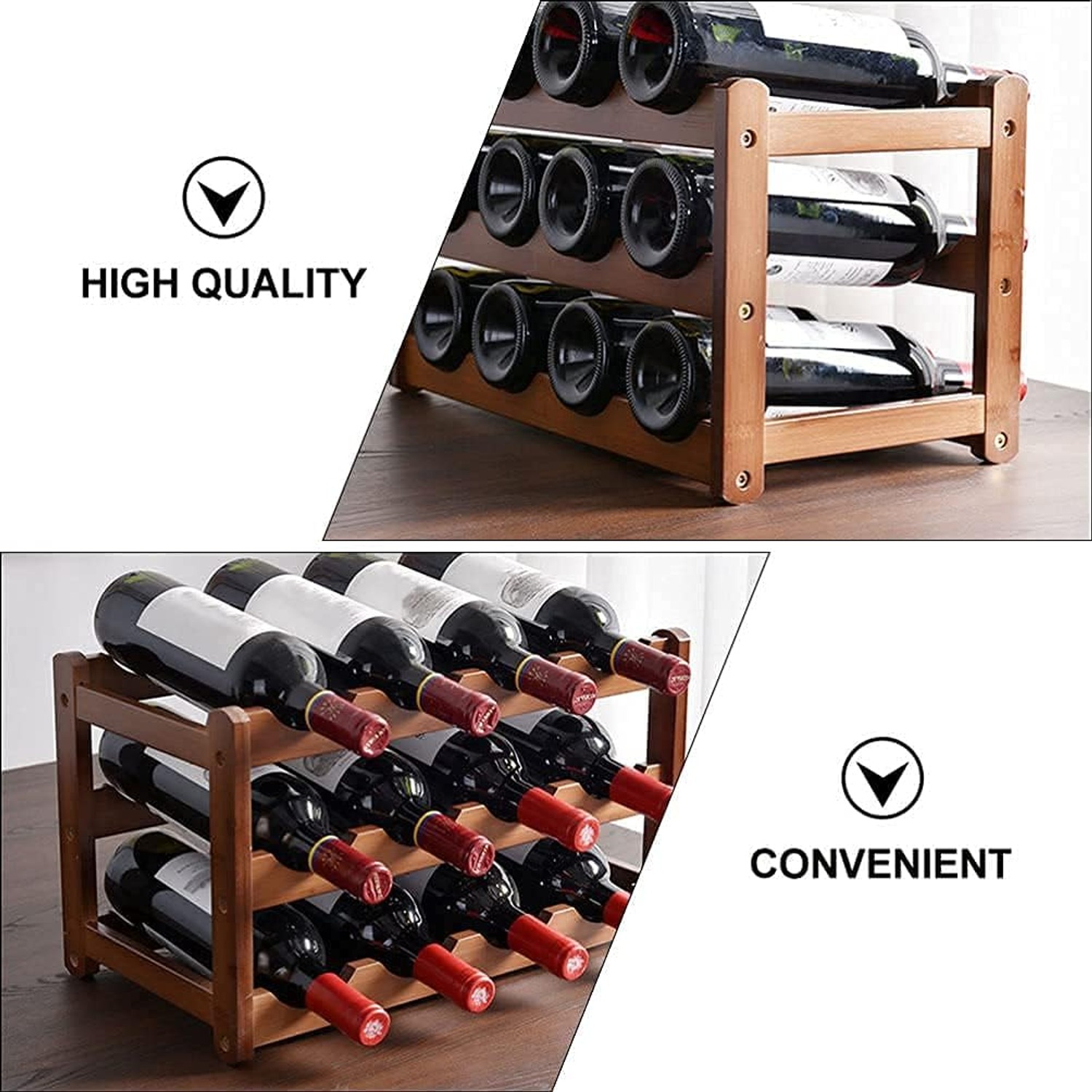
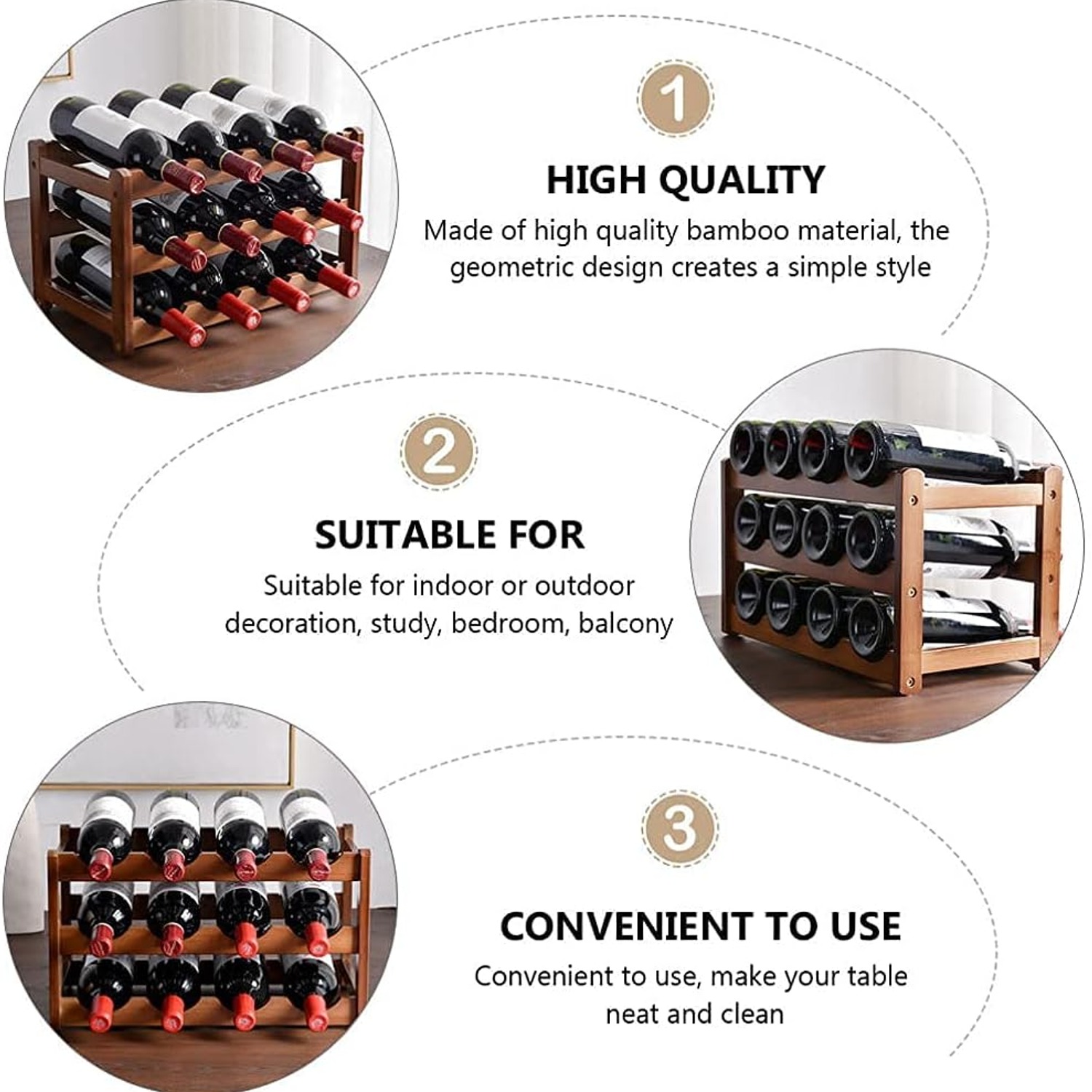
The design here is simple on purpose. Three bamboo shelves sit in a frame, one above the other, and each shelf has a wavy profile cut along it. Every dip in that wave cradles one bottle. Four dips per shelf, three shelves, twelve bottles.
The wave shape is doing more than it looks. On a flat shelf, bottles roll. They drift toward one side, bump each other, and the whole thing becomes a slow-motion avalanche every time you take one out. Setting each bottle into its own hollow stops that completely. You can remove the bottle from the middle of a full row and nothing else moves.
Horizontal storage matters if your bottles have real corks. A cork that dries out shrinks, and a shrunken cork lets air in. Lying the bottle down keeps wine against the cork so it stays swollen and sealed. If everything you buy has a screw cap this is less critical, but storing them flat does no harm and saves vertical space.
Bamboo is a sensible material for this job. It is strong for its weight, which is why a rack that carries twelve bottles of glass weighs only 1.1 kg empty. It is also grown fast and harvested without killing the plant, so it has a lighter footprint than most hardwoods. The painted protective finish on this rack covers the timber and makes wiping it down easy.
Who this suits
This is sized for a working household rather than a collector. Twelve bottles is roughly a case, which is how most people buy when they buy in bulk. If you pick up a mixed dozen every few months, this holds exactly one restock.
It suits renters particularly well. Nothing gets screwed into a wall, nothing is permanent, and the whole thing lifts with one hand when empty. If you move, it moves with you and can be taken apart again if the new place needs a different layout.
It also suits people who entertain at home. Sitting the rack on a sideboard next to the glasses turns storage into a small bar setup. Guests can see the options and help themselves, which saves you a trip to the pantry mid-conversation.
Who it does not suit: anyone storing serious wine long term. For that you want a temperature-controlled space with steady humidity and no light. A kitchen bench is none of those things. This rack is for the bottles you plan to drink in the next few months.
Getting the measurements right
Most disappointment with benchtop storage comes down to one skipped step. Measure before you buy.
Three numbers matter here. Width is 43 cm, so you need that much clear bench run. Depth is 23.5 cm, which is less than a standard kitchen bench but still needs clearance behind it if you have a splashback with a lip or a power point. Height is 27 cm, and this is the one people miss. If the rack is going under an overhead cupboard, measure the gap from bench to cupboard base. Many kitchens leave 40 to 50 cm there, which is plenty, but a shallow gap over a splashback tile can be tighter than you think.
Also think about what you lose. A 43 cm stretch of bench is real working space. If your kitchen is tight, the sideboard or a pantry shelf may serve better than the bench itself. A pantry shelf has the added benefit of being dark, which wine prefers.
Assembly and setup
The rack arrives flat. Inside the carton you get the panels, the instructions and a set of tools. Locating pins on the joints line the pieces up, so you are not eyeballing right angles and hoping.
Work on a flat surface with a towel under the parts to protect the finish. Lay out everything and check it against the parts list before you start. Fit the pieces loosely first, get the whole frame standing, then go around and tighten the joints evenly. Tightening one corner all the way before the others can pull the frame out of square.
Once it is together, set it down and press gently on the top. It should feel solid with no rocking. If one corner lifts, the surface underneath is uneven rather than the rack being faulty. Shift it or shim the spot.
Load from the bottom up. That keeps the weight low while you are filling it and makes the whole thing less tippy during the process.
Keeping it looking good
Care is genuinely minimal. A dry cloth over the shelves once a week handles dust. If a bottle has dripped, use a barely damp cloth on the mark and then dry it immediately. Bamboo does not want to sit wet.
Avoid abrasive pads and strong cleaning sprays. They will dull the painted finish faster than anything a bottle can do to it. Plain dry dusting is enough for almost every situation.
Position matters more than cleaning. Keep the rack out of direct sun, away from a kettle's steam plume, and clear of the cooktop. Timber handles everyday kitchen conditions fine, but repeated heat and moisture cycles are what cause finishes to lift over years. A shaded corner or a pantry shelf will keep it looking new much longer.
Every few months, give the joints a quick check. Anything that gets loaded and unloaded regularly can work slightly loose. A quarter turn with the supplied tool sorts it.
As a gift
A wine rack is one of the easier gifts to get right. It is useful, it is not clutter, and it does not require the recipient to have particular taste in anything. Housewarmings are the obvious occasion, but weddings, milestone birthdays and Christmas all work.
One tip. If you are giving it as a gift, assemble it first. A flat pack carton is an underwhelming thing to hand over, and the assembled rack with a bottle sitting in it makes the point immediately. The trade-off is that an assembled rack is harder to wrap and transport, so judge the occasion.
The short version
If you have somewhere between six and fifteen bottles knocking around the kitchen and no proper place for them, this solves it. Twelve bottles across three bamboo tiers, cradled so they do not roll, in a 43 x 23.5 x 27 cm footprint that most benches and sideboards can spare.
Measure your space first, particularly the height if an overhead cupboard is involved. Allow a few minutes for assembly. Keep it out of direct sun and away from steam, wipe it dry when it needs it, and check the joints occasionally.
Do that and you have a tidy bench, bottles you can actually see, and one less thing to think about when someone asks what you have open.