
The complete guide
How to Choose a Freestanding Wine Rack That Actually Fits Your Home
The pile on the pantry floor
Wine collections rarely start on purpose. A bottle arrives with a guest, another comes home from a weekend away, then a case goes on special and you buy it because the maths made sense at the time. Before long there is a cluster of bottles standing on the pantry floor, leaning against each other, getting nudged every time someone reaches for the flour.
That pile is a small problem with a few real costs. Bottles get knocked over. Labels tear when they scrape past each other. You lose track of what you actually have, so you buy more of the same and let the interesting bottle sit at the back for two years. And wine stored on a warm floor near an oven ages faster than it should.
A freestanding wine rack solves most of that in one move. It gets the bottles up off the ground, puts each one in its own slot, and makes the whole collection visible at a glance.
How a floor-standing rack works
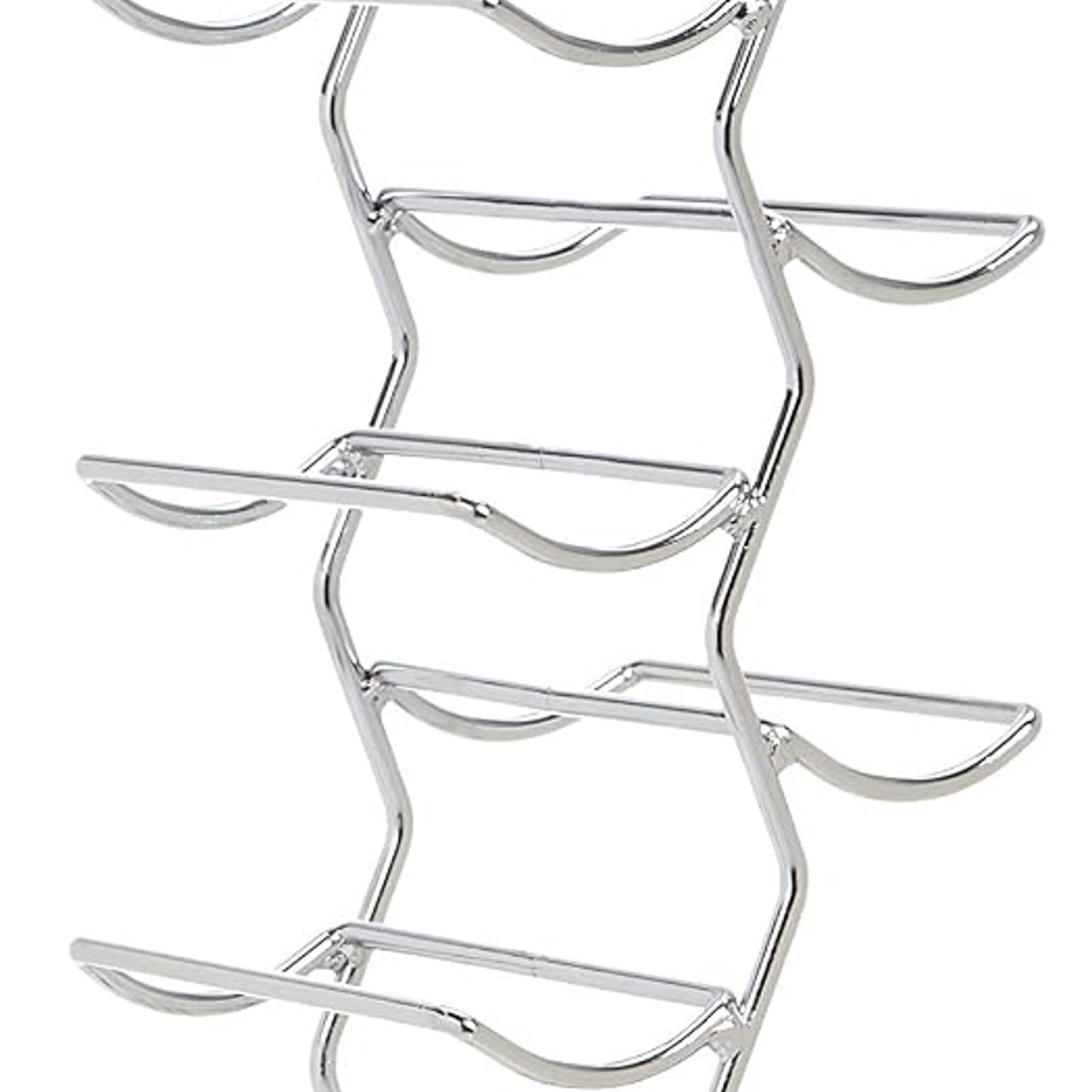
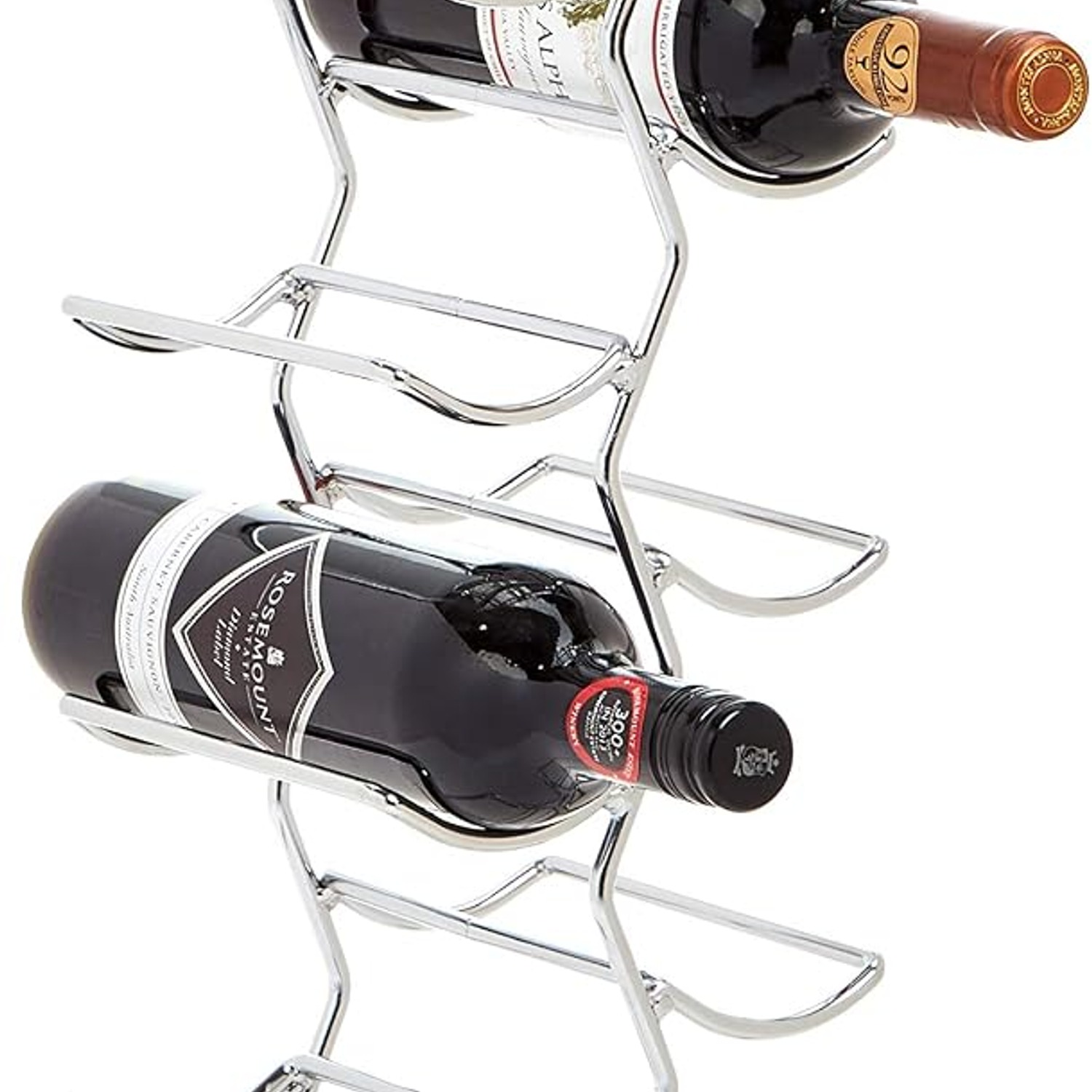
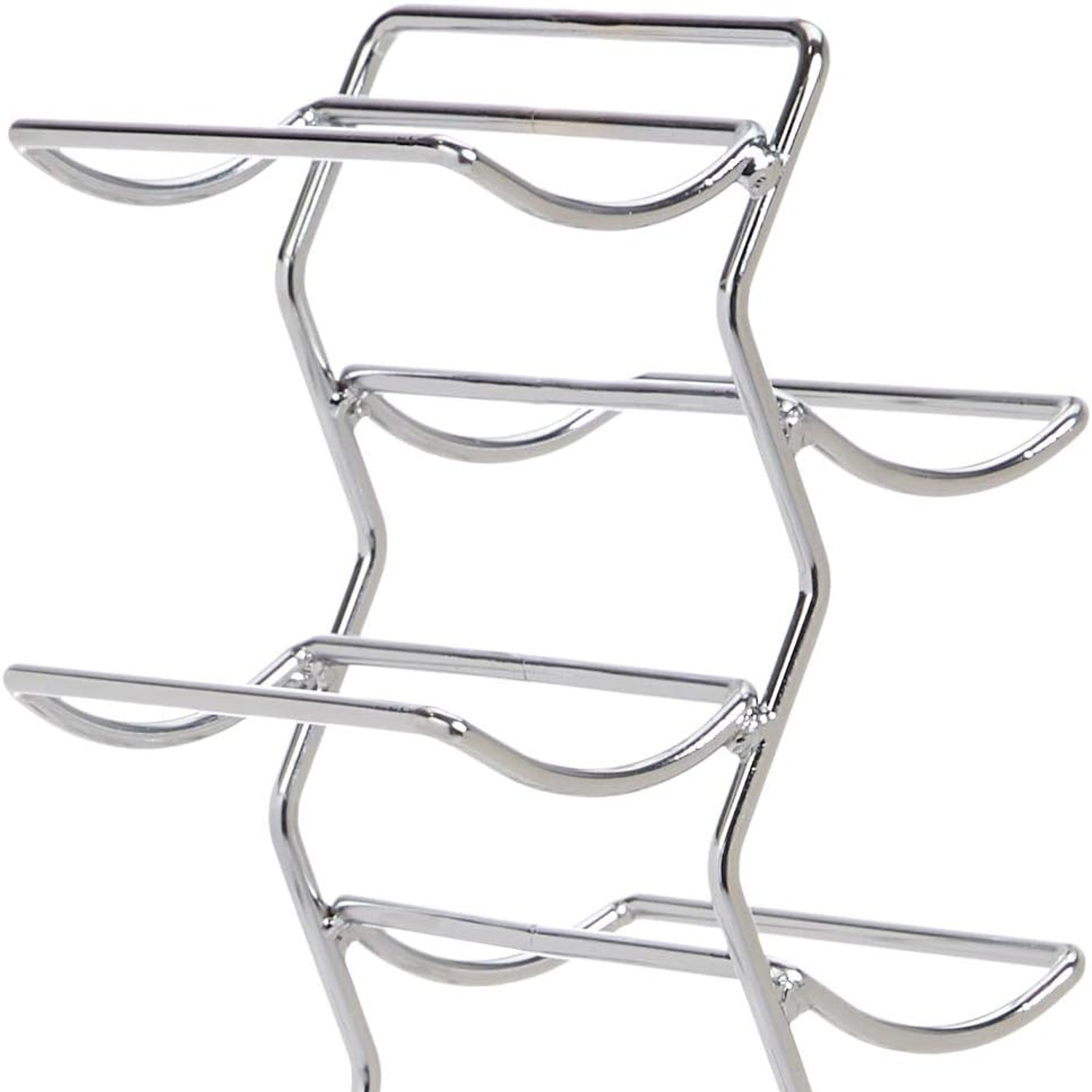
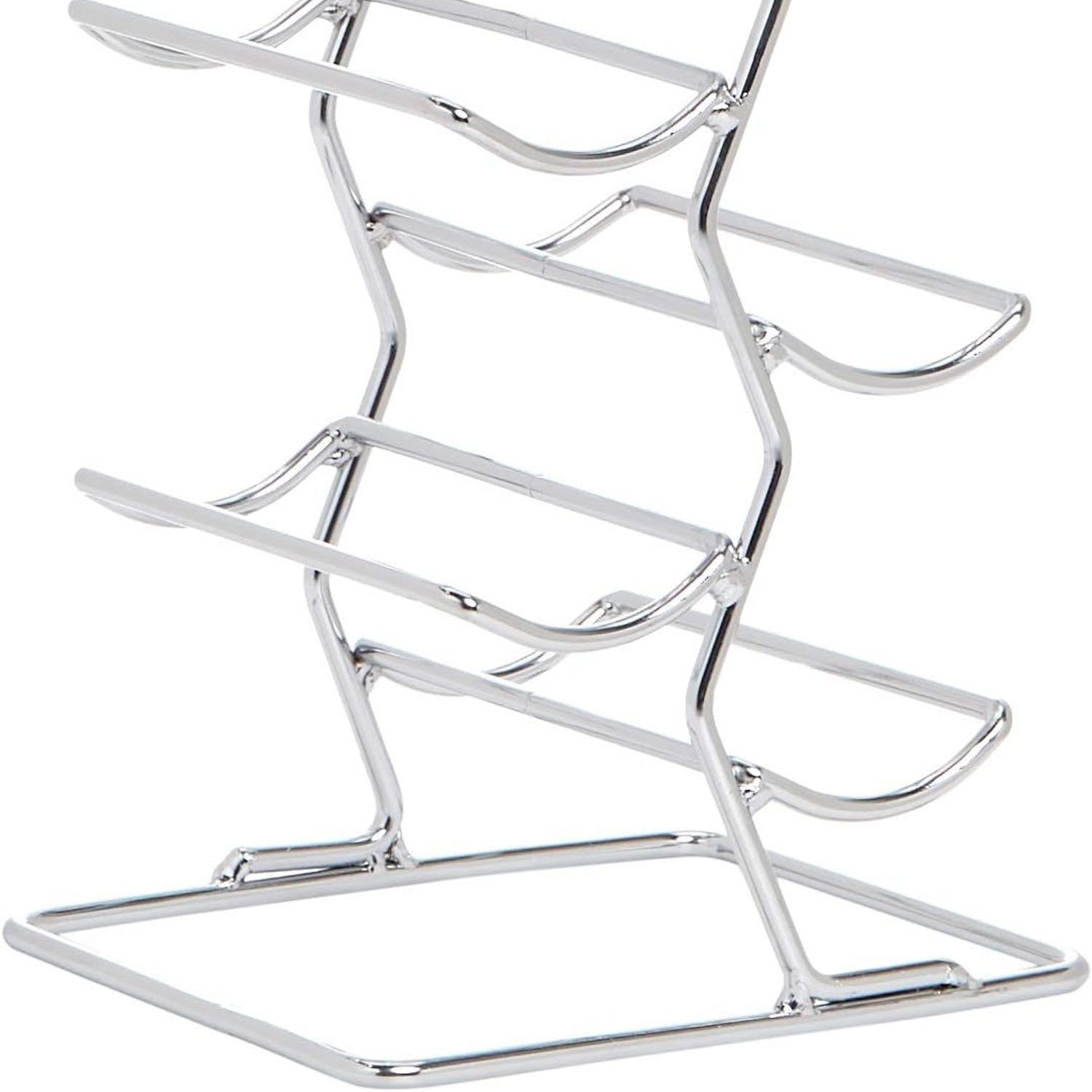
The idea is simple. A vertical metal frame carries a series of arms or rings, and each one cradles a bottle. Load from the top down or the bottom up, it does not matter, the weight sits low and centred because the bottles are the heaviest part.
This particular rack is chrome, both the material and the finish, which means a plated metal surface rather than paint. That matters for a piece of furniture that lives near food and drink. Chrome wipes clean, does not absorb spills, and does not chip the way painted timber does when a heavy bottle base knocks against it.
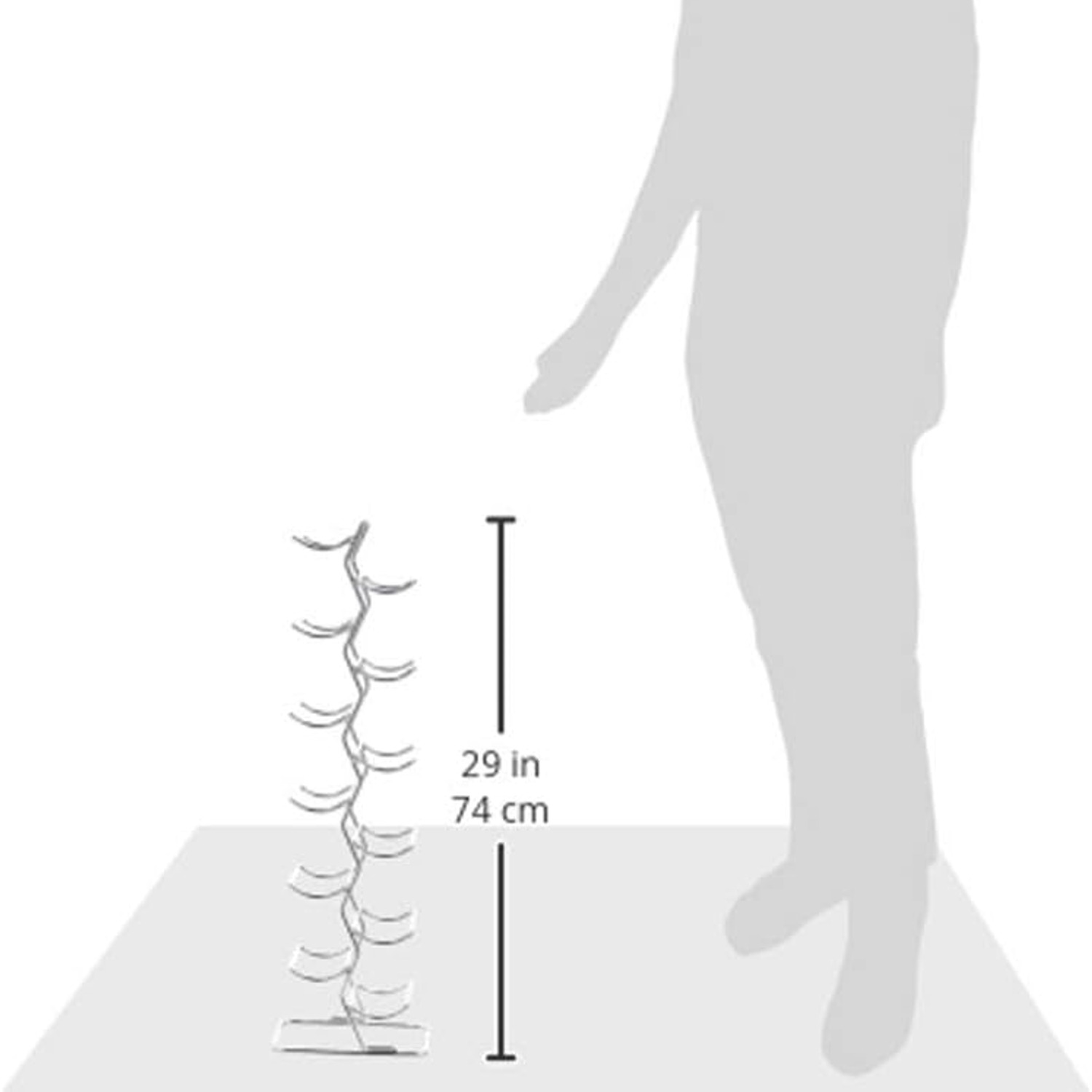
It stands 69.9cm tall on a base 21cm wide and 17cm deep. Those numbers are the whole story for most buyers. Twelve bottles in roughly the floor space of a dinner plate is an efficient trade, and the slim depth is what lets it sit flush against a wall rather than jutting into a walkway.
It also arrives with no assembly required. Unbox, stand it up, start loading. For anyone who has spent an evening with an allen key and a confusing diagram, that is worth something.
Who it suits
This style of rack earns its keep in a few specific situations.
Renters do well with it. Nothing is drilled, nothing is anchored to a wall, and nothing leaves a mark behind. When the lease ends you pick it up and take it to the next place. That is a big part of why people searching for the best wine rack for apartments keep landing on floor-standing models.
Small kitchens suit it too. There is almost always a dead gap somewhere, beside the fridge, at the end of a run of cupboards, in the corner by the back door. A 21cm wide tower fits those gaps when a wine cabinet never will.
It works for people who drink their wine rather than cellar it. Twelve bottles is a living supply, a few reds, a few whites, something sparkling waiting for a reason. If you are laying down vintage bottles for a decade, a climate-controlled cellar unit is the right tool and this is not it. For the normal rhythm of buying and drinking, twelve slots is close to perfect.
It also suits anyone who wants the collection on show. An open rack is a bit of display as well as storage. Bottles with good labels look like decoration, which is something a closed cupboard never gives you.
Working out whether it fits
Measure before you buy. It sounds obvious and it is still the step most people skip.
Start with width and depth. You need slightly more than 21cm of clear width and 17cm of depth, plus a little room at the front to lift bottles out at an angle. If the gap is exactly 21cm, keep looking, because you will fight it every time you reload.
Then check height clearance. At 69.9cm the rack clears most benches, but a low-set window sill, a wall-mounted shelf or an overhanging rangehood can get in the way of the top slot. Hold a tape measure up and look at what is above the spot, not just beside it.
Think about the floor surface. Hard, level flooring is ideal. Thick pile carpet lets a loaded rack rock slightly, and uneven old floorboards do the same. If your only option is carpet, push the rack back against a wall so it has something to rest against.
Finally, check your bottles. Maximum bottle diameter is not specified in this product record, so if your collection runs to wide burgundy bottles or magnums, measure one against the slot spacing before you commit. Standard bordeaux-shaped bottles and most champagne bottles are the common case and the rack is described as holding both.
Choosing between materials
Wine racks come in timber, wrought iron, powder-coated steel and plated metal, and each one behaves differently over years of use.
Timber looks warm and hides fingerprints, but it swells in humidity and it scratches. Wrought iron is heavy and characterful, though it can be bulky in a small room and some finishes shed flakes over time. Powder-coated steel is tough and comes in colours, but a deep chip shows the metal underneath.
Chrome sits in a useful middle ground. It reflects light, so a full rack still reads as slim rather than solid. It wipes down in seconds. It goes with stainless appliances, glass, white cabinets and timber benches without any real effort, which is why the best chrome wine rack options tend to get recommended for open-plan rooms where the piece is visible from the living area.
The trade-off is that chrome shows water spots if you let drips sit, and abrasive cleaning dulls it. Neither is hard to avoid.
Looking after it
Care here takes about thirty seconds a month.
Wipe the frame with a soft damp cloth and dry it immediately. That is the whole routine. Skip scouring pads, cream cleansers and anything with grit in it, because they leave a haze on plated metal that does not come back. Harsh solvents are also unnecessary, since there is nothing on a wine rack that a damp cloth cannot shift.
Lift bottles in and out rather than dragging them across the arms. Dragging is what eventually puts a visible scratch in a bright finish.
Check the rack is sitting level now and then, especially if it lives somewhere that gets bumped. A loaded rack on an uneven floor will lean a little more each month until someone notices.
Where to stand it
Wine does not care about the rack nearly as much as it cares about where the rack goes.
Heat is the main enemy. Keep the bottles away from the side of an oven, the top or back of a fridge where the motor vents, and any wall that gets afternoon sun. A temperature that swings up and down daily is worse than one that is slightly too warm but steady.
Light is next. UV degrades wine, and pale green or clear glass offers very little protection. A hallway, a dining room corner or a shaded pantry wall beats a spot by the kitchen window every time.
Vibration matters less than people think for wine you will drink within a year, but it is still worth avoiding the side of a washing machine.
The short version
Twelve bottles, a chrome frame, 21cm wide and 17cm deep, 69.9cm tall, 2.24 kg empty, and no assembly. That is the product in one line.
It is a good fit if you buy wine regularly, have a narrow gap to fill, and want the bottles visible and off the floor. It is not a cellaring solution for long-term ageing, and if your collection is full of magnums you should measure first.
Measure the gap, check the floor is level, pick a spot out of the sun, and the rest takes care of itself.