
The complete guide
How to Choose and Install an Under-Cabinet Wine Glass Rack
The problem with storing wine glasses
Wine glasses are badly suited to normal cupboards. They are tall, they do not stack, and the bowl is thin enough that one careless knock against a plate puts a chip in the rim. So they get pushed to the back of a shelf where nobody can reach them, or they live on the bench permanently and gather dust.
There is also the matter of how many you own. Most households accumulate glasses without meaning to. Six from a set, two from a gift, a couple of odd ones that came with something else. That collection takes up a full shelf, and the shelf above it is half empty because nothing else is tall enough to need it.
An under-cabinet rack fixes both issues at once. It uses the few centimetres of air directly below a cupboard, which is space you already own and are almost certainly not using. The glasses hang stem-up, out of reach of plates and mugs, visible and easy to grab. And the shelf they used to occupy goes back to holding things that actually stack.
How a hanging stemware rack works
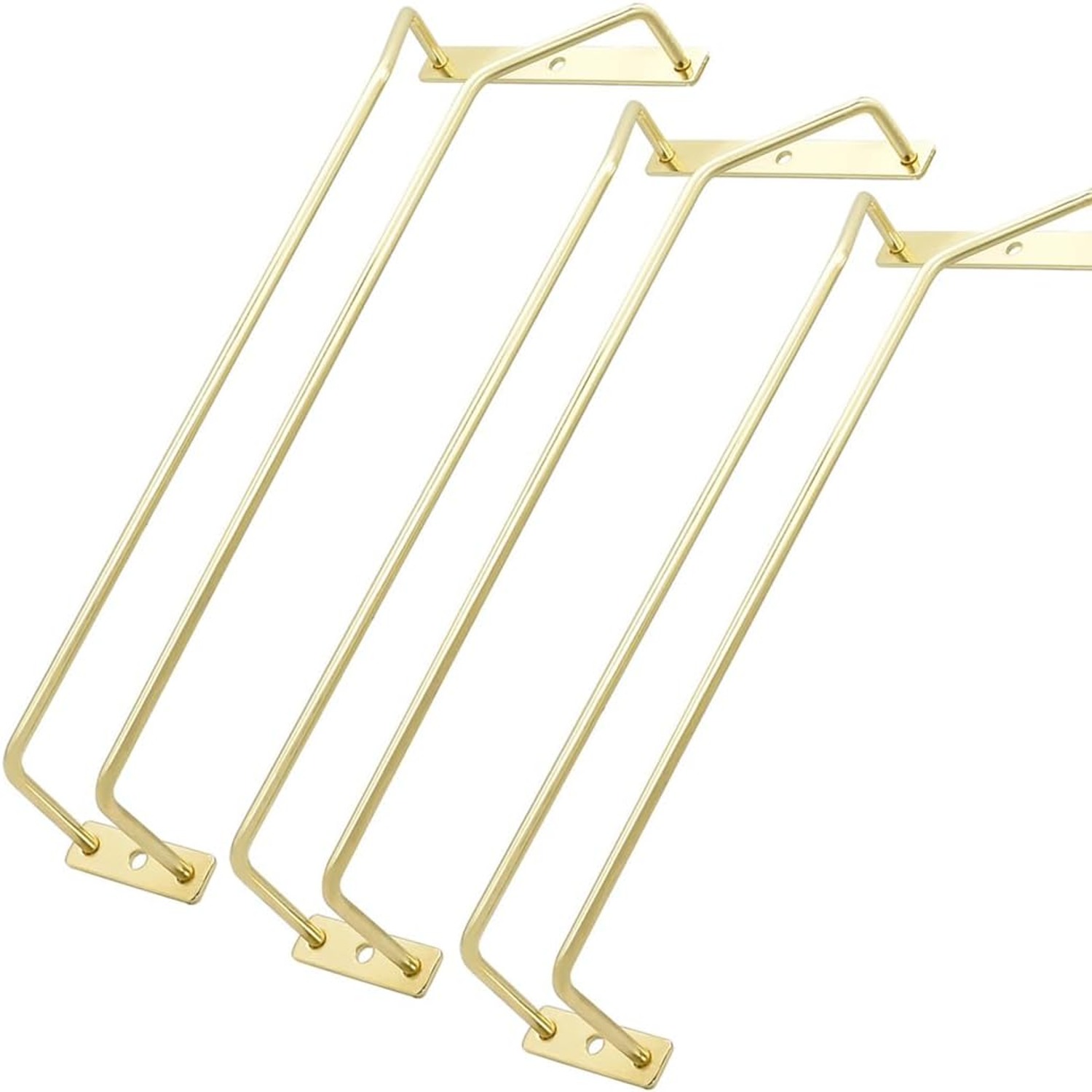
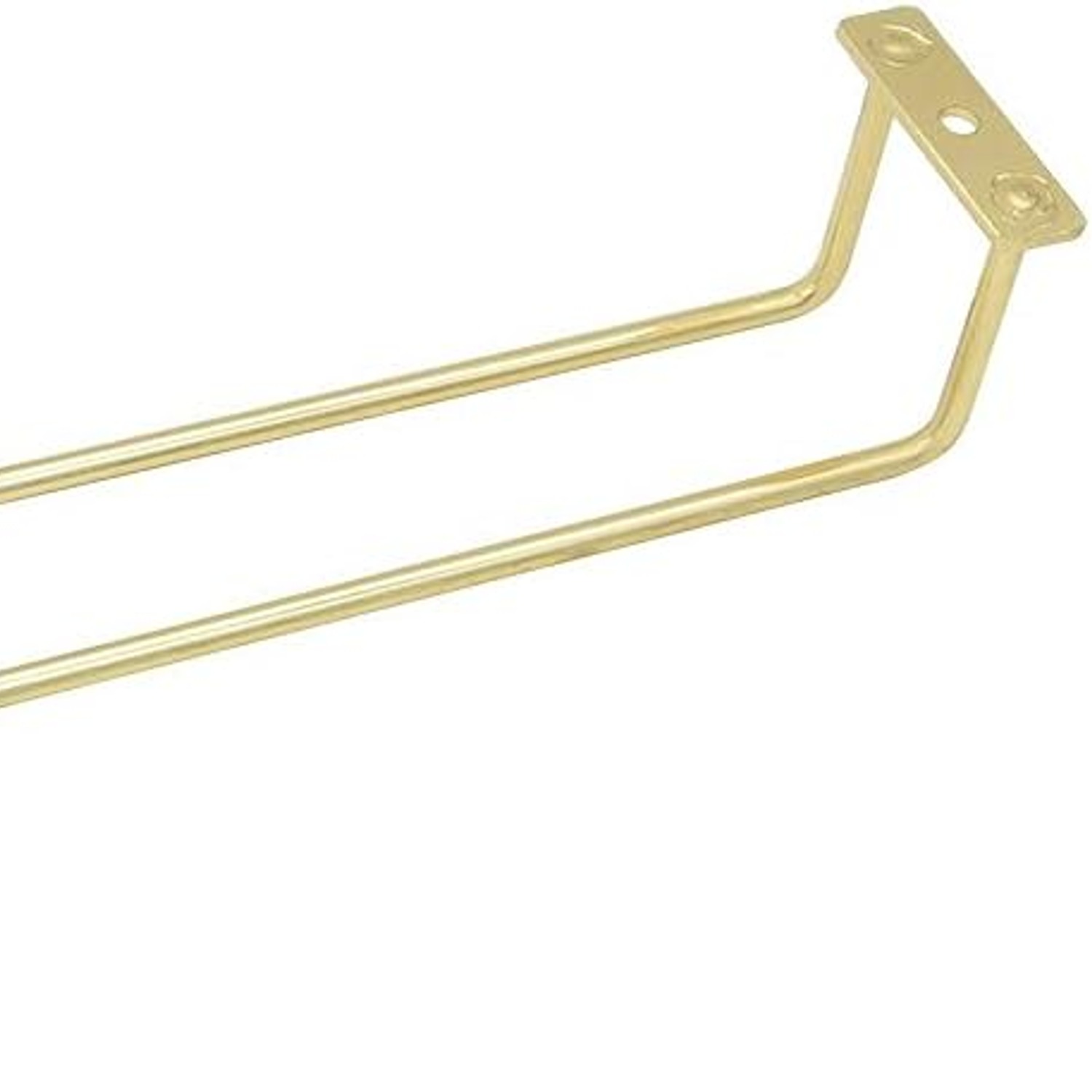
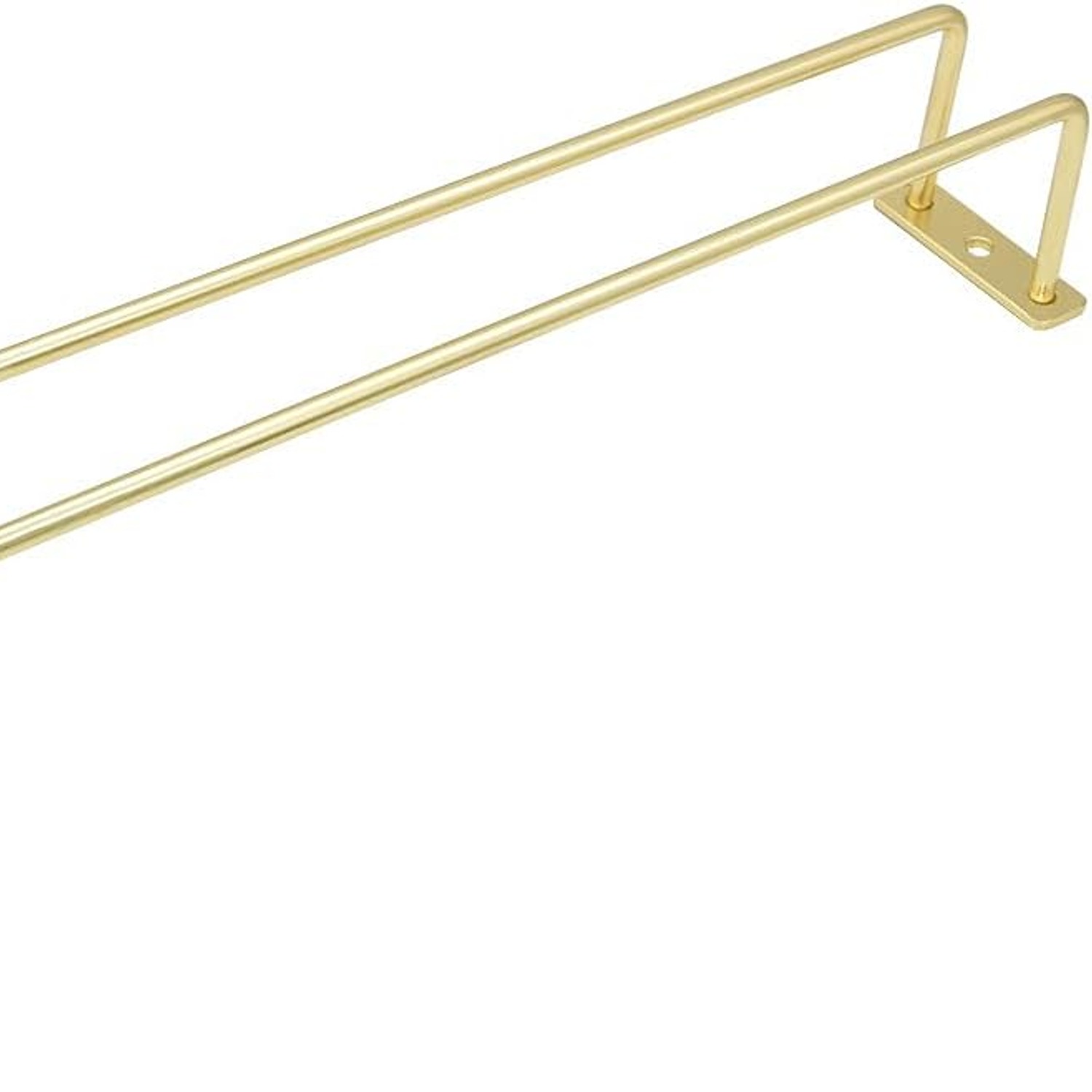
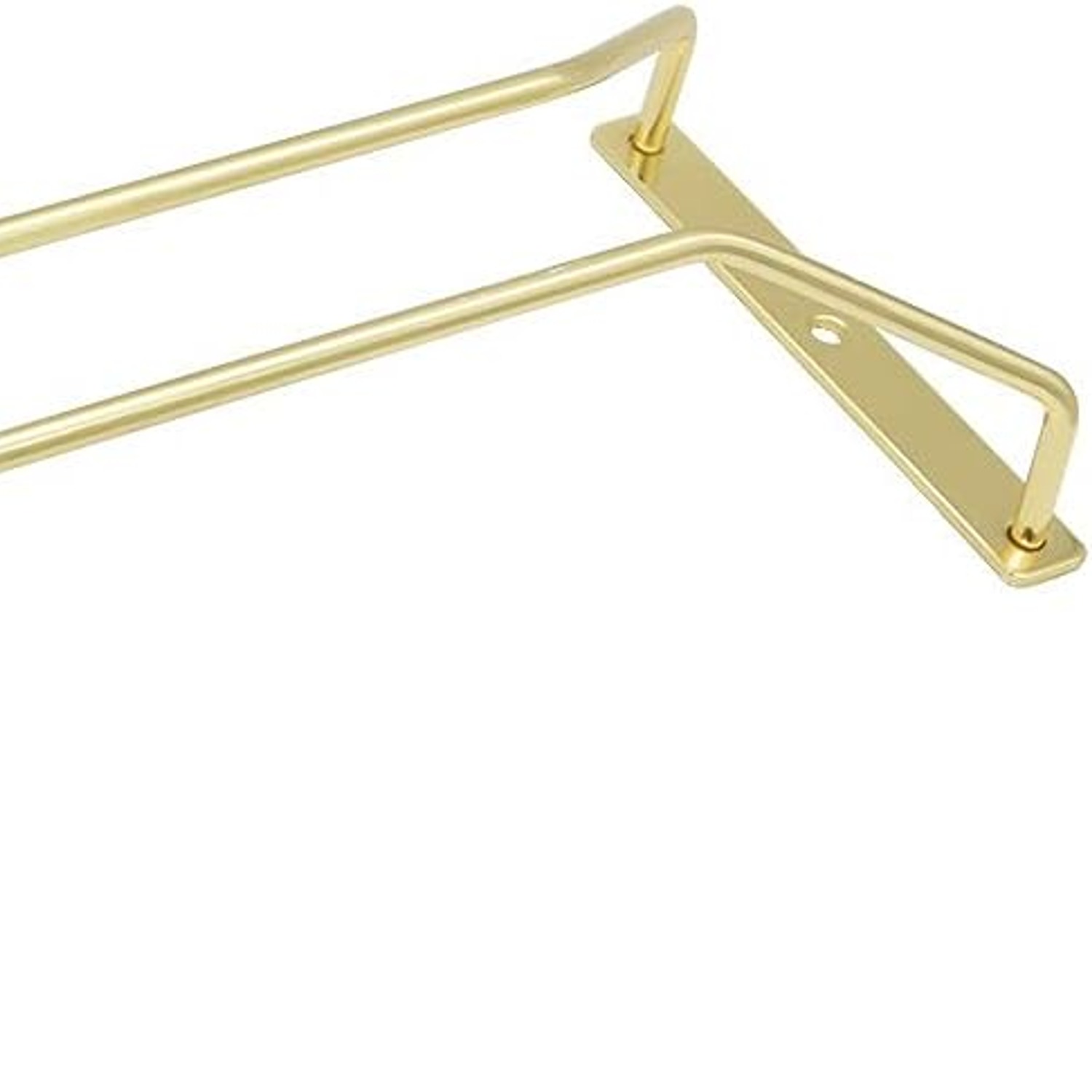
The mechanism is simple enough that it has not changed in decades. A rail with a slot runs front to back. You slide the foot of the glass into the slot so the base sits above the rail and the stem drops through the gap. The bowl hangs free underneath. The glass is held at its strongest point, the stem junction, and nothing touches the rim.
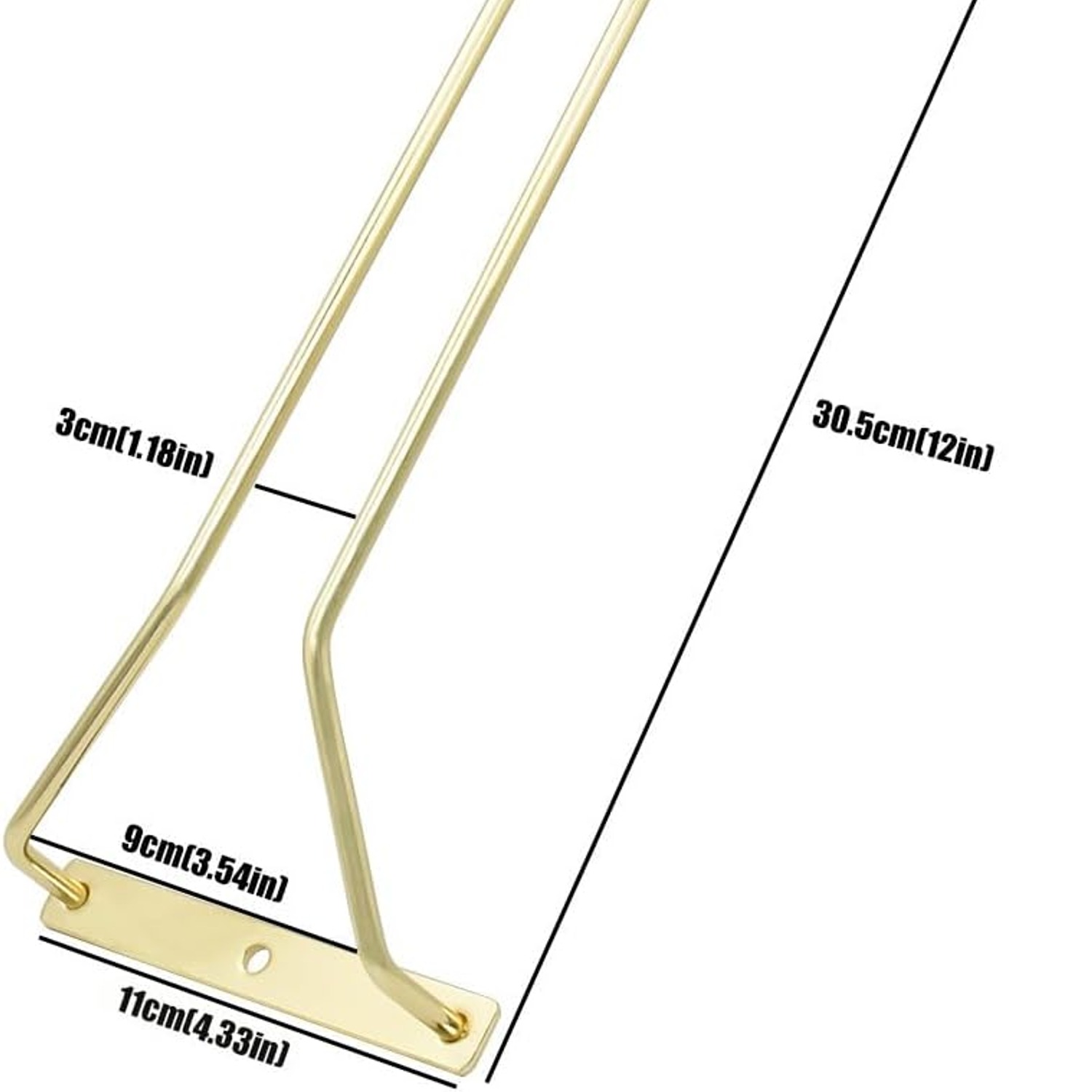
This set gives you three of those rails, each a single row, each 30.5cm deep and 10.8cm wide. They stand 5.1cm high, so once mounted they take barely a finger's width of vertical space before the glasses start. The frame is alloy steel with a brushed gold finish.
Because the three rails are separate, you are not locked into one layout. Push them together under a long cupboard and you get a wide multi-row display. Separate them and you can put stemware in three different zones, say near the fridge, above the sink, and over a dining sideboard. That flexibility is one of the nicer things about buying rails in a pack rather than one fixed unit.
Who this suits
Small kitchens benefit most. If you are short on cupboard space, anything that moves items out of a cupboard and into dead air is a win. People looking for the best space saving glass storage usually land on hanging racks for exactly this reason.
Home bars and bar carts are the other obvious fit. A bar looks unfinished without visible glassware, and a neat row of hanging stems does more for the look of a corner than almost anything else you could add. The brushed gold tone sits well against timber, dark cabinetry and brass taps.
Renters should think carefully. Installing means screwing into the underside of a cabinet, which leaves small holes. They are usually invisible from standing height, but check your lease and your landlord's attitude before you start.
Finally, if you entertain even occasionally, having glasses already out and dry saves a step. You pour without opening a cupboard, and after washing, the glasses drain in place.
Choosing the right spot
Start with your glasses, not the cabinet. Pull out the widest glass you own and measure the diameter of its base and the thickness of its stem. Those two numbers decide how many fit per rail and how far apart the rails need to sit. Chunky bistro glasses take up far more room than slim flutes.
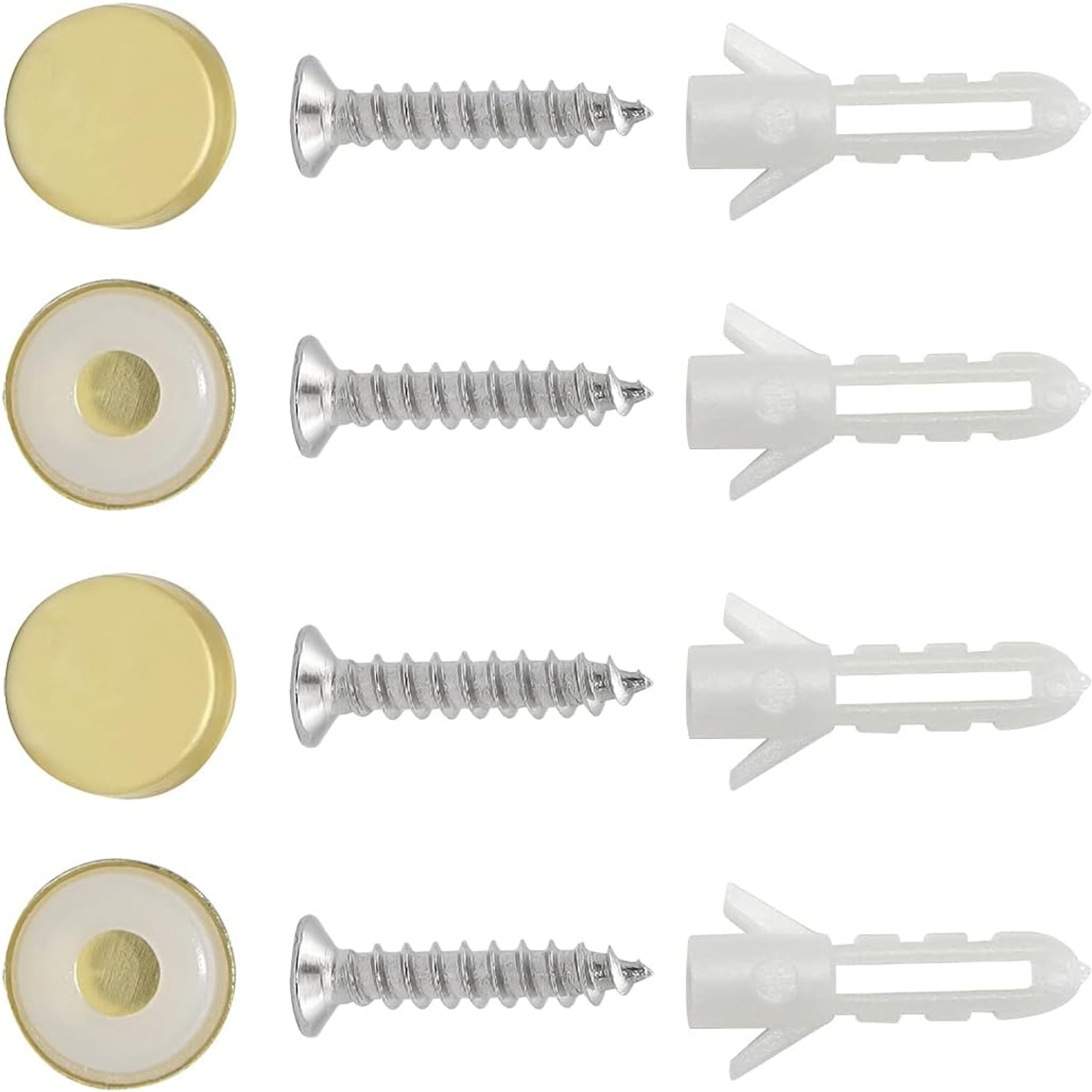
Next, look at the cabinet itself. The rack screws up into the underside, so you need something solid. Timber is ideal. A thin laminate base or a metal cabinet will need different fixings than the six screws supplied, so work that out before you buy anything else.
Think about head clearance too. A hanging glass drops roughly the height of the glass below the rail. If the cabinet sits low over a bench, do the maths and make sure you are not going to catch a bowl with your elbow while chopping vegetables. Above a sink or a bar run usually gives you more room than above a main prep area.
One more thing worth considering is heat and steam. Mounting directly over a cooktop means everything picks up grease and needs wiping more often. Shift it a cabinet along if you can.
Installing it properly
Lay the rails on the bench first and check they are all the same. Then hold one against the underside of the cabinet where you want it, and mark the screw positions with a pencil.
Before you drill anything, do a dry fit. Hold two glasses in the positions they would hang in and see whether the bowls clash. Adjust your marks until the spacing feels right. Pencil marks are much easier to change than screw holes.
Pilot holes help. A small drill bit, barely narrower than the screw, stops the timber splitting and makes driving the screws far easier. Drive them by hand for the last turn or two so you do not strip the hole.
Work out from a reference edge rather than measuring each rail independently. If you are running all three side by side, that keeps them in line. A spirit level or even a straight ruler held across the fronts will show up any drift before it becomes permanent.
Once everything is tight, load one glass and give the rail a gentle push to be sure it is firm. Then fill it up.
Looking after the finish
Brushed metal is forgiving. It does not show fingerprints the way polished plating does, and light scuffs tend to blend into the grain. What it does not like is abrasive cleaning. Scouring pads, gritty powders and strong bleach sprays will cut through a finish and leave dull patches that do not come back.
A soft damp cloth followed by a dry one is all it needs. Do that whenever you wipe the cabinet fronts and the rack will stay even in tone.
Dry your glasses before hanging them, or at least let them drip over a sink. Water sitting on metal for long periods is never ideal, and it can leave marks on the glass too.
Check the screws every few months. Anything that gets regular hand contact works loose eventually. A quarter turn with a screwdriver takes seconds and prevents the slow sag that people only notice once a glass has fallen.
The short version
This is a three-pack of brushed gold under-cabinet rails, each 30.5cm deep, 10.8cm wide and 5.1cm high, made from alloy steel and supplied with six screws. They mount to the underside of a timber cabinet or shelf with a screwdriver, and hold wine glasses hanging by the stem.
Measure your widest glass base first. Pick a cabinet that is solid underneath and not directly over the hob. Dry-fit before you drill, use pilot holes, and keep the rails in line if you are running them together.
Done properly, it takes under an hour, frees a shelf, and makes a kitchen or bar corner look considered rather than crowded. That is a reasonable return on three small rails and six screws.