



The complete guide
How to Choose and Install a Wall Mounted Wine Bottle Rack
The problem with storing wine in a small home
Wine takes up more room than people expect. Six bottles on a bench looks like clutter. Six bottles in a cupboard means shifting them every time you want the rice. Six bottles in a cardboard box under the stairs means you forget what you own and drink the same thing for a year.
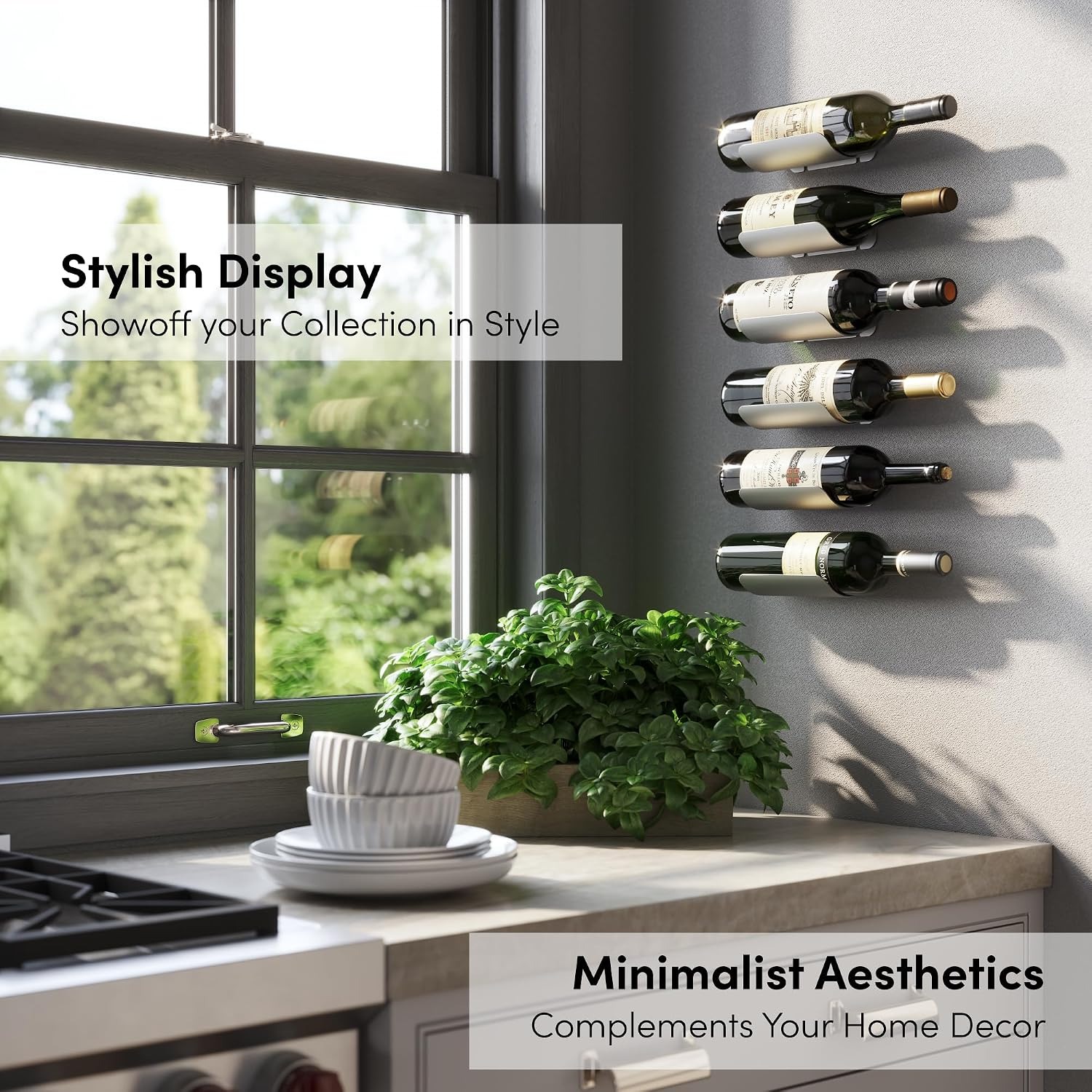
A freestanding rack solves part of it, but it eats floor space, and floor space is the thing most kitchens and apartments have least of. That is the gap a wall mounted wine rack fills. The wall above a sideboard, the strip beside a pantry door, the narrow panel between a window and a corner: all of it is usually doing nothing. Put bottles there and you get storage without losing a single square centimetre of usable floor.
The other thing you get is visibility. When bottles sit in a row on the wall, you can see what you have. You stop buying a third bottle of the same shiraz because you forgot about the other two.
How this rack works
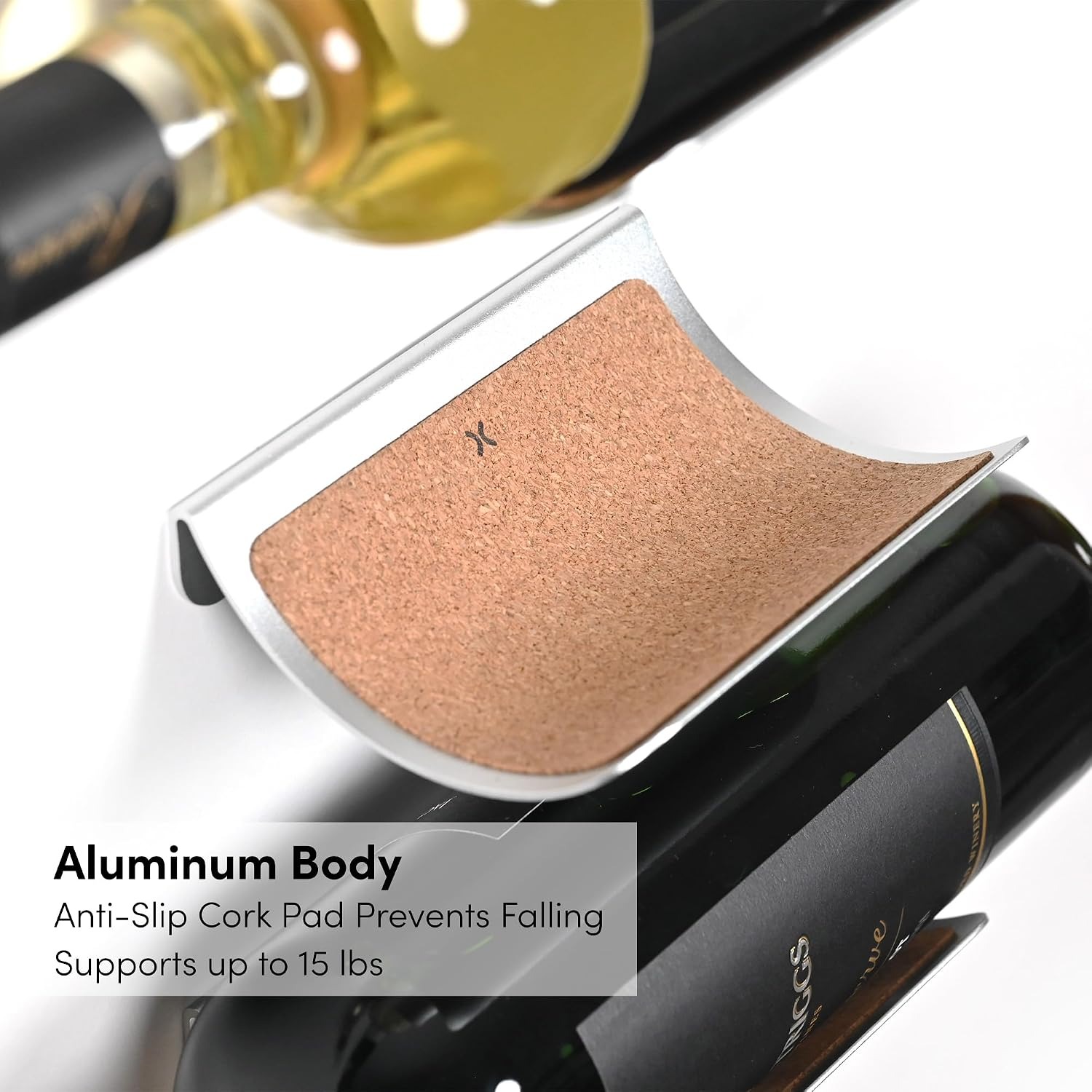
Instead of one long frame, this set is six separate holders. Each one is a shallow aluminium bracket shaped as a semicircle, 9.1 cm deep, 12.7 cm wide and 2.8 cm high. The bottle lies horizontally in the cradle, neck pointing out from the wall.
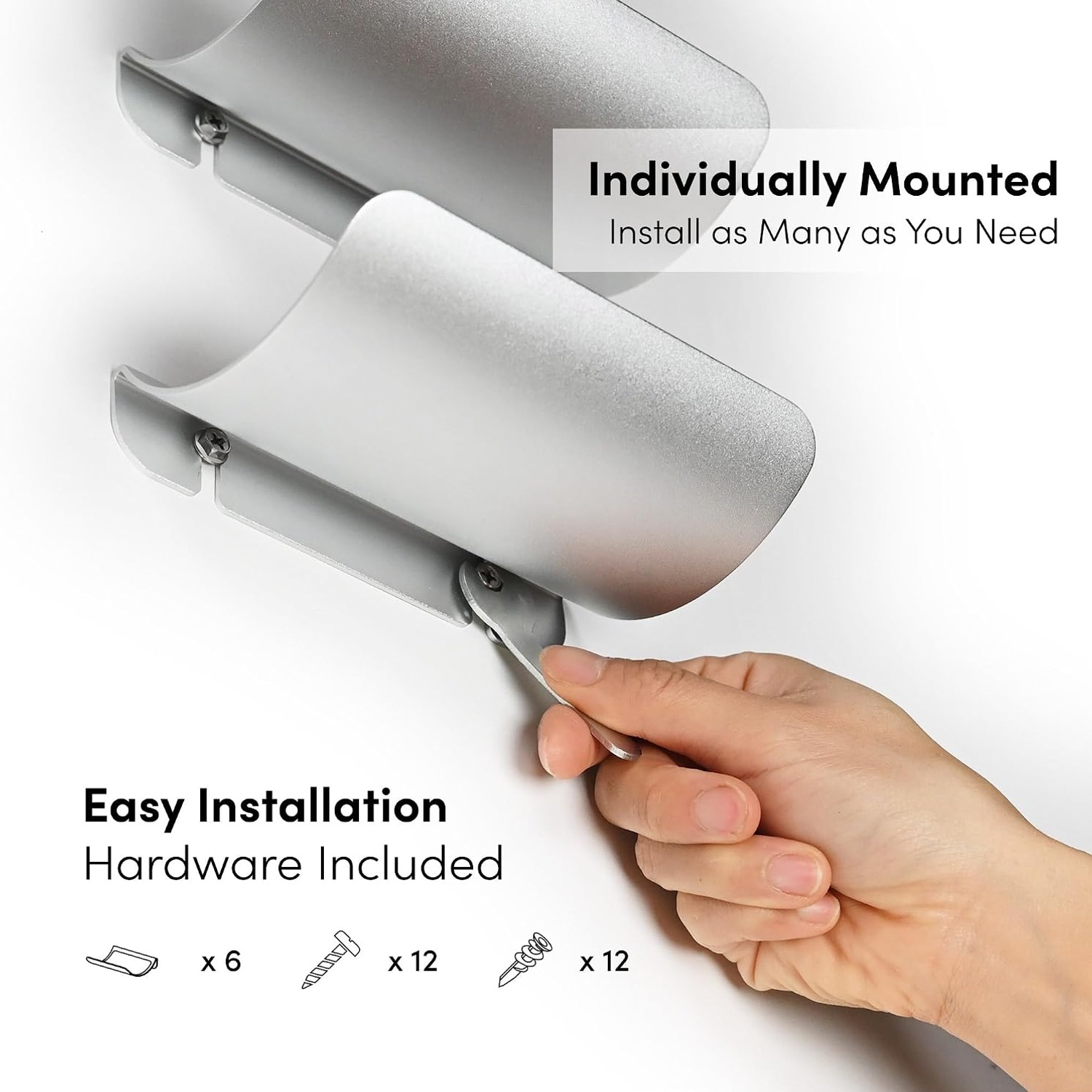
Because the parts are separate, the layout is yours to decide. That is the main practical advantage over a one piece rack. A single frame has to fit the wall you have. Six brackets fit whatever wall you have, including awkward ones with a power point in the middle or a slope at one end.
Inside the cradle there is cork padding. Cork is a sensible choice for this job. It has natural grip, so a smooth glass shoulder is less inclined to slide, and it is soft enough that the bottle and the label rest against something forgiving. It also looks right next to wine, which is a small thing, but small things add up on a display.
The metal is aluminium with an anodised finish. Anodising is an electrochemical process that thickens the natural oxide layer on the surface of the aluminium. The short version is that the finish is part of the metal rather than a coat of paint sitting on top, which is why the recommended care is nothing more than a wipe with a damp cloth.
Who it suits
This set makes sense if you keep a working collection rather than a cellar. Six bottles is about what most households have open or waiting at any time, and a single set covers that neatly. If you buy by the case, two or three sets along a longer wall will handle it, and the holders line up as long as your spacing stays consistent.
It also suits renters who want something smarter than a box but who are not going to install a cabinet. Six small brackets leave six small sets of holes. That is a far easier conversation at the end of a lease than a built in unit.
Anyone building a bar corner will find it useful too. The holders take any cylindrical bottle of a similar diameter, so spirits and mixers can go up alongside the wine. A couple of brackets in a pantry make a tidy wine bottle holder for oil and vinegar bottles that otherwise topple over behind the tins.
Where it suits less well is long term ageing. A kitchen wall is warmer and brighter than a proper storage space, and this is a display rack, not a climate controlled one. Use it for the bottles you plan to drink in the coming weeks and months, and keep anything you are genuinely cellaring somewhere dark and cool.
Choosing where to put it
Three things matter: temperature, light and reach.
Temperature first. Keep the rack away from the oven, the stovetop, the dishwasher vent and the top of a fridge. Heat cycling is harder on wine than a steady warm room.
Light second. Direct sun through a window will warm bottles and, over months, affect what is inside them. A shaded wall, a hallway or the inside wall of a dining room is kinder.
Reach third. Mount it at a height where you can lift a full bottle out without stretching. If the run sits above a bench, leave enough clearance that the neck of the bottle does not interfere with what you do on that bench. In a home with small children, going higher is the easy safety answer.
Also think about what is behind the wall before you commit. Avoid drilling near a power point, a light switch or a run of pipework. If you are unsure, a cheap stud and cable detector is worth the money.
Getting the install right
This is where most wall mounted wine rack installations succeed or fail. The brackets themselves are light at 68 grams each, but a filled wine bottle is around 1.2 kg, and six of those on one wall adds up.
Work out your spacing first. For a single row, measure the widest bottle you own, add a comfortable gap, and use that as your centre to centre distance. Something around 12 to 15 cm usually works, but measure rather than guess. Mark every hole position in pencil along a level line before you touch the drill.
Then match the fixing to the wall. If you can hit a timber stud, do it, because a screw into solid timber is the strongest option available in a standard interior wall. Where there is no stud, use the supplied drywall anchors and set them properly: drill the right size pilot hole, seat the anchor flush, then drive the screw. For brick, block or concrete, buy masonry plugs and use a masonry bit, since the included anchors are intended for plasterboard.
Tighten with the supplied wrench until the bracket is firm against the wall. Do not keep going past that point. Over-tightening into plasterboard is one of the easiest ways to strip an anchor.
Before you load the whole set, hang one bottle and leave it for a day. If nothing has moved, fill the rest.
Living with it
Day to day, the rack asks for very little. Lift bottles straight out rather than dragging them sideways and the cork pad stays in good condition. Wipe the aluminium with a soft damp cloth when it needs it, and dry it off so you do not get water spots. Skip the scouring pad and anything harsh, as abrasives are the main enemy of an anodised finish.
Every few months, give each bracket a gentle push upward to check nothing has loosened. Walls move slightly with seasons and temperature, and a thirty second check beats a dropped bottle.
If you want to expand later, buy a second set and continue the same spacing. Keeping a written note of your measurements when you first install makes that much easier a year down the track.
The short version
Six separate aluminium holders, anodised in silver, with cork padding inside each cradle. They mount individually, which means you build the shape that fits your wall instead of settling for whatever shape a one piece frame dictates. Anchors, screws and a wrench are in the box, and instructions are included.
Spend your effort on two things: picking a cool, shaded spot, and getting the fixings right for your wall type. Do those well and you end up with bottles off the bench, a clear view of what you own, and a wall that finally earns its keep.